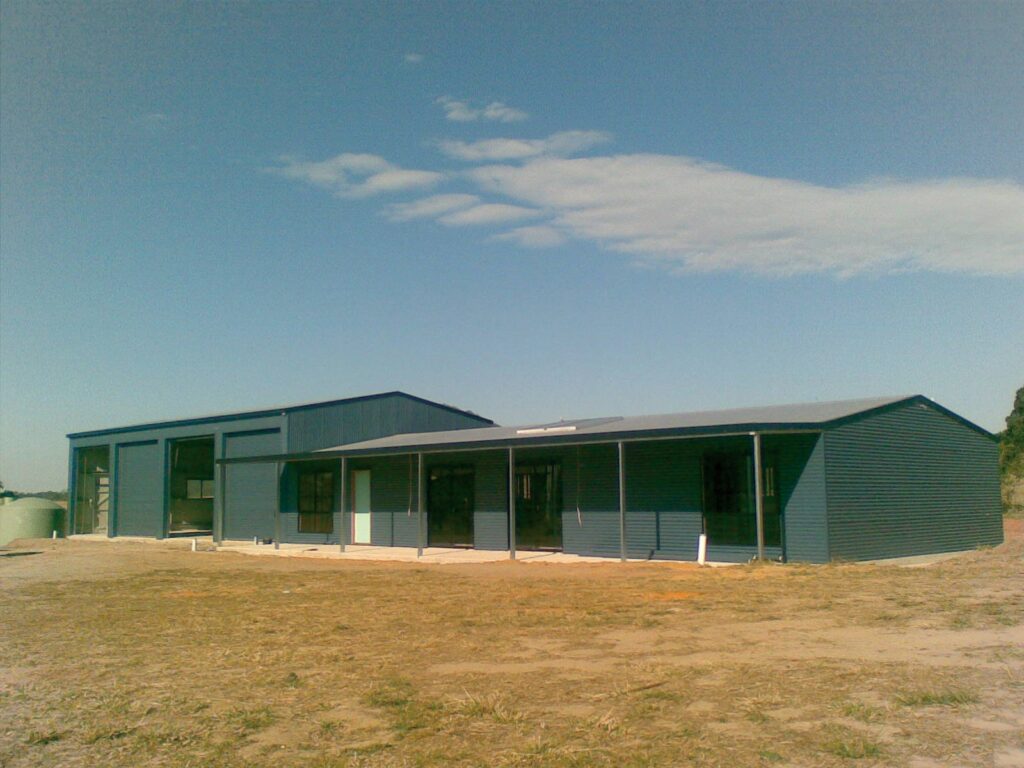
A farm shed is usually the hardest-working building on any rural property. It protects machinery worth hundreds of thousands of dollars, stores hay that feeds your livestock through dry seasons, and provides workspace for everything from welding to shearing.
After 38 years of building experience, here’s what actually matters when choosing a farm shed.
What Are You Storing?
The single most important question. Your answer determines the size, height, access, and configuration of your shed.
Machinery & Equipment
If you’re housing tractors, headers, or implements, you need clearspan construction, no internal posts to navigate around. Machinery sheds need wide openings (typically 4.2m+ high roller doors) and enough depth for long implements.
Minimum specs for machinery:
- Clearspan width: 12m-24m+ (no internal columns)
- Eave height: 4.2m-6m (accommodate raised implements)
- Door height: Match your tallest piece of equipment + 300mm clearance
- Depth: Length of longest implement + 2m manoeuvring space
Hay Storage
Hay sheds have specific requirements that differ from general farm storage. Hay is heavy (round bales can weigh 500kg+), stacks high, and needs ventilation to prevent moisture buildup and spontaneous combustion.
Key hay shed considerations:
- Open-front design for ventilation and loader access
- High eave height for stacking (5m-6m+)
- Floor area calculated by bale count and stacking pattern
- Roof pitch that sheds water clear of stored hay
Livestock
Livestock buildings need ventilation, drainage, and often specific configurations for handling, races, yards, crush areas. Equine sheds are a specialised category with different requirements again.
Site Considerations
Wind Region
Your shed must be engineered for your specific wind region. Properties in northern Australia or exposed coastal sites may need cyclone-rated construction. Every Shedz kit is engineered to your exact site coordinates.
Access
Consider how you’ll drive machinery in and out. Think about turning circles, approach angles, and whether you need drive-through access (doors on opposite ends).
Orientation
Face open sides away from prevailing weather. In most of eastern Australia, this means opening to the north or east. Your local conditions may differ.
Clearspan vs Multi-Bay
Clearspan construction (no internal posts) is essential for machinery and hay. Multi-bay designs with internal columns are cheaper per square metre but restrict what you can store and how you access it.
For most working farm sheds, clearspan is worth the extra investment. The flexibility to rearrange, upgrade equipment, and access stored items without navigating around posts pays for itself over the life of the building.
COLORBOND® for Farm Buildings
Choose colours that blend with your landscape: Woodland Grey, Pale Eucalypt, and Dune are popular choices for rural properties. Some councils require earth-tone colours in rural zones. All 22 COLORBOND® colours are available with up to 45 year manufacturer warranty.
Explore Our Full Range
Farm Sheds · Hay Sheds · Machinery Sheds · Equine Sheds · Commercial Sheds · Industrial Sheds · Shed Homes