
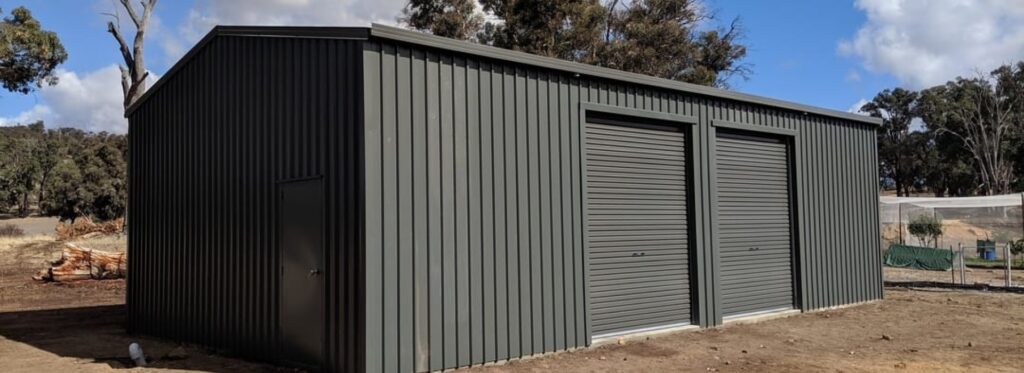
If your property is in a designated cyclone region, your shed isn’t just a building, it’s potentially a shelter. Cyclone-rated construction isn’t optional in these areas; it’s a mandatory engineering requirement that affects every component of your shed.
Wind Regions Explained
Australia is divided into wind regions that determine the minimum engineering standard for any structure:
- Region A: Most of southern Australia. Standard wind loads.
- Region B: Elevated wind areas. Parts of southern coastal regions and some inland areas.
- Region C: Cyclone-prone areas. Most of tropical northern Australia including coastal QLD north of Bundaberg, NT, and northern WA.
- Region D: Severe cyclone areas. Specific high-risk coastal zones within Region C.
Your wind region is determined by your exact site coordinates. Even within the same council area, properties can fall in different regions based on terrain category, shielding, and topography.
What Makes a Shed Cyclone-Rated?
It’s not just about using thicker steel. Cyclone-rated construction requires engineering changes throughout the entire structure:
Connections
Every connection, column to footing, rafter to column, purlin to rafter, cladding to purlin, must be engineered to resist the specific wind loads for your site. In cyclone regions, these connections use heavier brackets, more fasteners, and sometimes welded joints instead of bolted.
Footings
Cyclone-rated sheds require significantly larger footings to resist uplift forces. In extreme wind, the force trying to lift your shed off the ground can be enormous. Footing designs are calculated for your specific soil conditions and wind loads.
Bracing
Additional cross-bracing, portal frames, or moment connections are required to resist lateral (sideways) wind forces during a cyclone. The bracing design depends on the building dimensions and the wind load.
Cladding & Fasteners
Roofing and wall sheeting must be fixed with more fasteners at closer spacings, particularly at edges and corners where wind loads are highest. The cladding profile itself may need to be upgraded to a higher wind-rated product.
Regions That Require Cyclone Rating
Queensland
Coastal QLD north of approximately Bundaberg falls within Region C or D. This includes Gladstone, Rockhampton, Mackay, Townsville, and Cairns. See our full QLD coverage →
Western Australia
Northern WA from approximately Geraldton northward, including Carnarvon, Karratha, Port Hedland, Broome, and the Kimberley, requires cyclone-rated construction. See our full WA coverage →
Northern Territory
Most of the NT, including Darwin, falls within cyclone wind regions.
Does Cyclone Rating Cost More?
Yes, typically 15-30% more than a standard wind-region shed of the same size. The additional cost comes from heavier steel sections, more fasteners, larger footings, and more complex engineering. But this is a non-negotiable requirement, it’s there to protect your property, your livestock, and your equipment.
Engineering Certification
Every Shedz kit includes engineering certification calculated for your specific site coordinates and wind region. We don’t use generic “one-size-fits-all” engineering, your shed is designed for exactly where it’s going to stand.
Explore Our Shed Range
Cyclone Rated Sheds · Farm Sheds · Commercial Sheds · Industrial Sheds · Shed Homes