Category: Shed Guides

  • How Much Does a Shed Cost in Australia? 2026 Pricing Guide

    What Determines Shed Cost?

    If you’ve started shopping for a shed, you’ve probably noticed the huge range in pricing. A basic garden shed might cost a few thousand dollars, while a large farm or commercial shed can run into six figures. Understanding what drives the cost helps you make smarter decisions.

    The main cost factors are:

    • Size — the biggest single factor. More square metres = more steel, more concrete, more cost
    • Height — taller sheds need heavier columns and larger footings
    • Wind rating — cyclone-rated sheds (C1–C4) need heavier steel and more bracing
    • Doors and openings — large roller doors add significant cost. More openings = more engineering
    • Complexity — lean-tos, awnings, mezzanines, and non-standard shapes add to the price
    • Location — delivery costs vary, and remote sites attract freight premiums
    • Finish level — basic shed vs workshop vs livable dwelling

    2026 Price Ranges by Shed Type

    These are indicative ranges for steel frame shed kits (materials only, not including slab, erection, or fitout). Actual pricing depends on your specific requirements — contact us for an accurate quote.

    Residential Sheds

    Residential sheds include garages, workshops, garden sheds, and backyard storage.

    • Single garage (6m x 6m): $4,000–$8,000
    • Double garage (6m x 9m): $7,000–$14,000
    • Workshop (9m x 12m): $12,000–$22,000
    • Large residential (12m x 15m+): $18,000–$35,000

    Farm Sheds

    Farm sheds are typically larger with wider spans and higher clearances for machinery access.

    • Small farm shed (12m x 9m): $12,000–$22,000
    • Medium farm shed (18m x 12m): $25,000–$45,000
    • Large machinery shed (24m x 18m): $45,000–$80,000
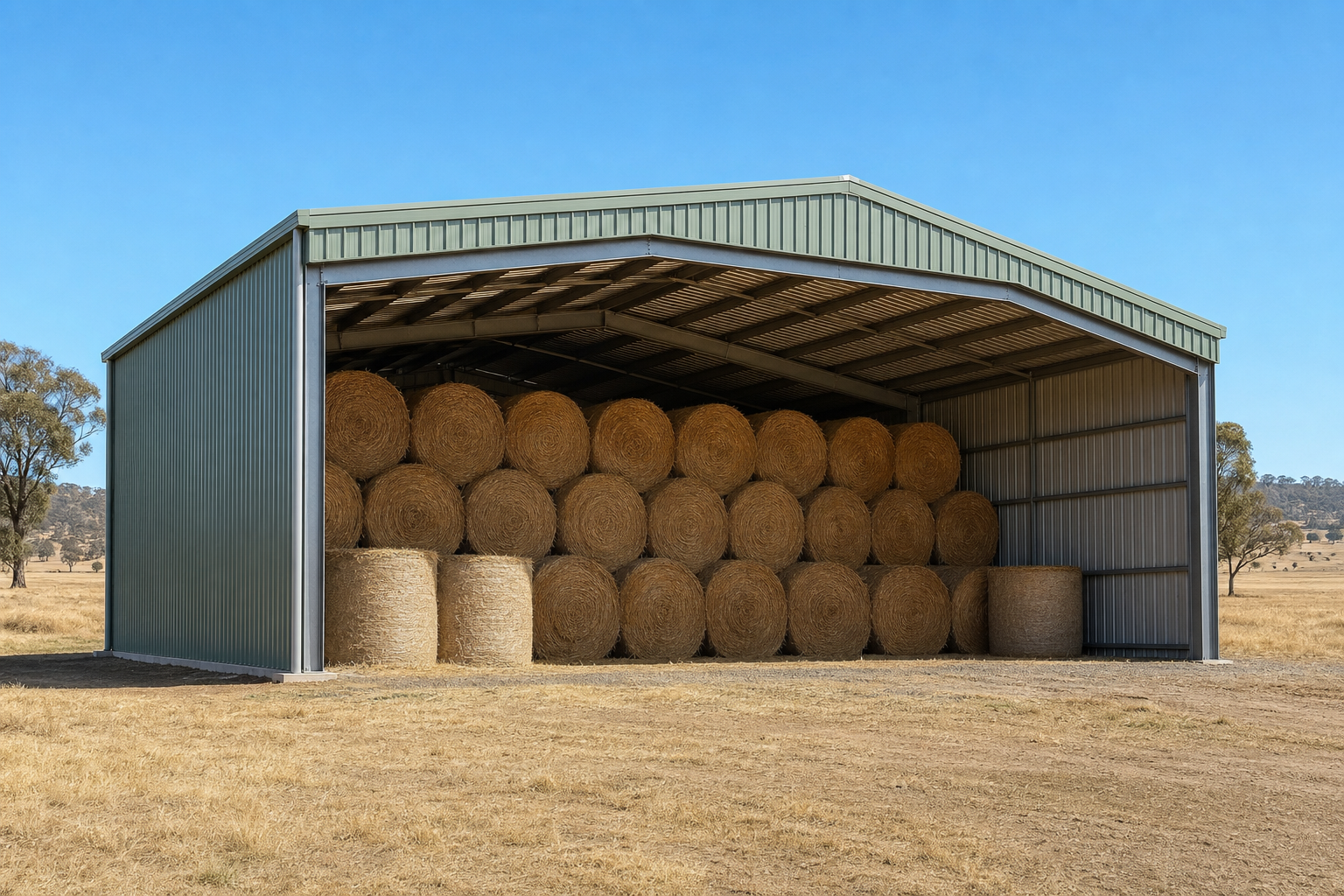
    • Hay shed (open front, 18m x 12m): $20,000–$35,000

    Commercial & Industrial

    Commercial and industrial sheds are engineered for heavier loads and larger spans.

    • Small warehouse (18m x 15m): $35,000–$60,000
    • Medium warehouse (24m x 18m): $55,000–$95,000
    • Large industrial (30m+ spans): $80,000–$150,000+

    Livable Shed Homes

    Livable shed home kits are priced based on the structural package. Fitout is additional.

    • Kit only: varies by design — see our shed home models for current pricing
    • Total build cost (kit + slab + fitout): typically $1,200–$2,500/m² for a complete livable home
    • Owner builder savings: 25–40% compared to a builder-managed project

    What’s Included in a Kit Price?

    A Shedz kit price includes the complete structural package:

    • Steel portal frame (columns, rafters, knee connections)
    • Purlins and girts
    • COLORBOND® roof and wall sheeting (22 colour options)
    • Ridge cap, barge capping, and all flashings
    • Doors (roller doors, personal access doors, sliding doors as specified)
    • Windows (as specified)
    • All structural bolts, brackets, tek screws, and fasteners
    • Site-specific engineering drawings (stamped by a registered engineer)
    • Delivery to your site

    Additional Costs to Budget For

    The kit is only part of the total project cost. Budget for:

    • Concrete slab or piers: $80–$150/m² (see our foundation guide)
    • Erection labour: $15–$40/m² if you’re not erecting it yourself
    • Council fees: $500–$3,000 for DA, building permit, and inspections
    • Soil test: $300–$800
    • Survey: $500–$1,500
    • Insulation: $8–$30/m² depending on type (see our insulation guide)
    • Electrical: $2,000–$8,000 for power, lights, and GPOs

    How to Get the Best Value

    • Design smart — standard bay spacings (3m or 4.5m) are more economical than custom spacings
    • Consider your door count — every roller door adds cost. Do you need three, or will two do?
    • Don’t over-build — a shed engineered for your actual wind zone is cheaper than one over-specified
    • Bundle your openings — windows and PAs in the same wall bay share framing
    • Owner build if you canowner builders save the builder margin and control their own timeline

    Want an accurate price for your project? Design your shed in 3D and request a quote based on your exact specifications.

  • How to Insulate a Steel Shed: Stop Condensation & Stay Comfortable

    Why Insulate Your Steel Shed?

    Steel is an excellent building material — strong, durable, termite-proof, and fire-resistant. But it conducts heat and cold efficiently, which means an uninsulated steel shed can be unbearably hot in summer, freezing in winter, and prone to condensation year-round.

    Insulation solves all three problems. For livable shed homes, insulation isn’t optional — it’s a Building Code requirement. But even for workshops, garages, and hobby sheds, insulation makes your space usable 12 months a year.

    The Condensation Problem

    Condensation is the number one complaint from steel shed owners who skip insulation. When warm, moist air inside the shed hits the cold steel surface, water forms on the underside of the roof. This leads to:

    • Dripping onto stored items, tools, and vehicles
    • Rust formation on the inside of the steel (from the outside, your COLORBOND® coating is fine)
    • Mould and mildew growth
    • Damage to hay, grain, and feed in farm sheds

    The solution is a vapour barrier combined with insulation — creating a thermal break between the warm inside air and the cold steel.

    Insulation Types for Steel Sheds

    Reflective Foil (Sisalation / Anticon)

    The most common insulation for steel sheds. A layer of reflective foil laminate is laid over the purlins before the roof sheeting is installed. Anticon is the brand name for foil-backed blanket insulation specifically designed for steel roofing.

    • R-value: R1.0 to R1.5 (reflective only) or R1.5 to R2.5 (with blanket)
    • Best for: garages, workshops, storage sheds — stops condensation and provides basic thermal comfort
    • Cost: $8–$15/m² installed

    Glasswool Batts

    For livable sheds and spaces that need higher thermal performance, glasswool batts are installed between the steel frame and internal lining. This is the standard approach for meeting BCA energy efficiency requirements.

    • R-value: R2.0 to R6.0 depending on thickness
    • Best for: livable shed homes, offices, studios — meets NCC/BCA energy requirements
    • Cost: $15–$30/m² installed (including vapour barrier)

    Spray Foam

    Closed-cell spray foam provides excellent insulation and acts as its own vapour barrier. It’s applied directly to the inside of the steel cladding.

    • R-value: R3.5 to R6.0+ per 50mm thickness
    • Best for: cold climates, high-performance builds, odd-shaped spaces
    • Cost: $25–$50/m² installed — the most expensive option but the best thermal performance

    Which R-Value Do You Need?

    The required R-value depends on your climate zone (as defined by the NCC) and whether your shed is habitable:

    • Non-habitable sheds — no minimum requirement, but R1.0+ stops condensation
    • Climate zones 1–3 (tropical/subtropical QLD, NT, northern WA): walls R2.8, ceiling R4.1 minimum
    • Climate zones 4–5 (temperate NSW, VIC, SA): walls R2.8, ceiling R4.1–R5.1
    • Climate zones 6–8 (cool/alpine TAS, highlands): walls R2.8–R3.8, ceiling R5.1–R6.3

    Your building certifier will confirm the exact requirements for your location.

    Installation Tips

    • Install roof insulation before sheeting — it’s much easier to lay foil/blanket over the purlins before the roof goes on
    • Don’t compress batts — squashing them reduces their R-value significantly
    • Seal all gaps — insulation only works if air can’t bypass it. Tape joins in foil, fill gaps around doors and windows
    • Ventilate — even insulated sheds need some airflow. Whirlybirds, ridge vents, or louvre vents prevent moisture build-up
    • Consider wall insulation too — roof-only insulation helps but walls are responsible for 25–35% of heat transfer

    Planning a shed that needs insulation? Design it in our 3D tool and we’ll help you choose the right insulation approach for your climate and use case.

  • Shed Foundations: Concrete Slabs, Piers & Getting It Right

    Why Your Shed Foundation Matters

    Your foundation is the most critical part of any shed build. Get it wrong and you’ll deal with cracking, shifting, water pooling, and structural problems for the life of the building. Get it right and your shed will perform exactly as engineered for decades.

    For steel frame sheds, the foundation must match the engineering specifications. Every Shedz kit comes with site-specific engineering drawings that specify exactly what your slab or footings need to look like — including dimensions, reinforcement, hold-down bolt locations, and concrete strength.

    Types of Shed Foundations

    Concrete Slab on Ground

    The most common foundation for steel sheds in Australia. A reinforced concrete slab provides a level, durable surface that doubles as your floor. Typical specifications:

    • Thickness: 100mm for residential sheds, 150mm+ for heavy vehicle or industrial use
    • Concrete strength: N25 or N32 depending on engineering requirements
    • Reinforcement: SL82 or SL72 mesh, with additional reinforcement at edges and thickenings
    • Edge beam: typically 300mm x 300mm with N12 reinforcing bars
    • Hold-down bolts: cast into the slab at precise locations matching your frame layout

    Important: Always refer to your signed-off engineering drawings for the concrete slab and footings design and specifications for your specific shed. The above are general guidelines only — your engineer’s specifications take priority.

    Pier Footings

    Pier footings (also called pad footings or post footings) are individual concrete pads poured at each column location. They’re common for:

    • Sloping sites where a full slab isn’t practical
    • Rural properties where a gravel or earth floor is preferred
    • Farm sheds where machinery needs to drive in and out
    • Budget-conscious builds where you want to minimise concrete costs

    Each pier is typically 600mm x 600mm x 600mm deep, with hold-down bolts cast in. Your engineering drawings will specify the exact size and depth based on your soil classification and wind loads.

    Strip Footings

    A continuous strip of concrete along the shed walls. Less common for standard sheds but sometimes used for livable shed homes where the wall loads are distributed along the entire length.

    Site Preparation

    Before any concrete is poured, your site needs to be prepared:

    1. Soil test — a geotechnical report classifies your soil (A, S, M, H, E, or P class). This determines your footing design.
    2. Clearing and levelling — remove vegetation, topsoil, and level the pad area
    3. Compaction — compact the sub-base to the required density
    4. Drainage — ensure water drains away from the slab. Consider ag-pipe around the perimeter.
    5. Services — if your shed needs water, sewer, or electrical, run the pipes and conduits before the slab is poured

    Getting the Hold-Down Bolts Right

    This is where most DIY slabs go wrong. Hold-down bolts must be placed at exact positions matching your steel frame layout. Even 10mm out and you’ll have problems bolting down the columns.

    Tips for getting it right:

    • Use a template or jig — many shed suppliers provide bolt layout drawings
    • Double-check dimensions before the pour — measure diagonals to ensure square
    • Set bolts to the correct height — too low and the thread won’t engage, too high and the baseplate won’t sit flat
    • Protect bolt threads during the pour — wrap with tape or use bolt caps

    Cost Guide

    Concrete slab costs vary significantly based on site conditions, location, and concrete prices in your area. As a rough guide:

    • Small residential shed (6m x 6m): $3,000–$6,000
    • Medium shed (12m x 9m): $8,000–$15,000
    • Large farm/commercial shed (18m x 12m+): $15,000–$30,000+

    These figures include excavation, formwork, reinforcement, concrete supply, and finishing. Add 20–30% for difficult sites (slope, rock, poor access).

    Choosing a Concretor

    For owner builders, the slab is one job worth getting a professional for. Look for:

    • Experience with shed slabs (not just house slabs — the bolt layouts are different)
    • Willingness to work from your engineering drawings
    • A clear quote that itemises concrete volume, reinforcement, and finishing
    • Insurance and licensing appropriate for your state

    Need help planning your shed foundation? Contact Shedz and we’ll provide the engineering drawings your concretor needs to get it right first time.

  • Owner Builder Shed Guide: Save Thousands by Managing Your Own Build

    What Is an Owner Builder?

    An owner builder is someone who takes on the responsibility of managing their own building project instead of hiring a licensed builder. In Australia, most states allow you to apply for an Owner Builder Permit for residential construction — including shed homes and large rural sheds.

    Being an owner builder doesn’t mean you have to do all the physical work yourself. It means you’re the project manager: you coordinate trades, manage timelines, ensure compliance, and take responsibility for the quality and safety of the build.

    Why Build Your Own Shed?

    The housing crisis has stretched the building industry thin. Wait times for licensed builders can exceed 12 months, and margins on builder quotes often add 25–40% to the actual cost of materials and labour. As an owner builder, you remove that margin entirely.

    For a steel frame shed kit, the savings can be substantial:

    • No builder margin — you pay trades directly at their rates
    • Control over quality — you choose the trades and materials for fitout
    • Flexible timeline — build at your pace, stage payments as you go
    • Full understanding of your building — you know every component intimately

    Owner Builder Requirements by State

    Each state has different rules for owner builders. Here’s a summary:

    Queensland

    Owner Builder Permit required for work valued over $11,000. Must complete a QBCC-approved Owner Builder course. No permit needed for sheds under certain size thresholds — check your local council for exempt development rules.

    New South Wales

    Owner Builder Permit required for work valued over $10,000. Must complete an approved owner builder course through NSW Fair Trading. Some shed work may qualify as exempt or complying development.

    Victoria

    Owner Builder Certificate of Consent required from the Victorian Building Authority (VBA). Must complete prescribed owner builder training. Building permit still required for the shed itself.

    South Australia, Western Australia, Tasmania, NT, ACT

    Requirements vary — generally a permit or notification is needed for work above a threshold value. Contact your state building authority for current requirements. See our state pages for links to relevant authorities.

    How Shedz Supports Owner Builders

    We designed our entire system around owner builders. Here’s what you get:

    Interactive 3D Component Mapping

    Every single component in your shed kit is mapped in our 3D designer. You can see exactly where each piece goes — columns, rafters, purlins, girts, bracing, flashings, right down to individual bolts and screws. Search by part number from the bill of materials and the 3D model highlights exactly where it fits.

    This isn’t a rough guide — it’s a precise, interactive model of your exact shed. If you can identify a part number, you can find where it goes. Visit our owner builder page to see screenshots of this in action.

    Certified Engineering Drawings

    Your kit comes with full engineering drawings stamped by a registered structural engineer. These cover:

    • Footing design and specifications
    • Steel frame connection details
    • Bracing layout
    • Wind and load calculations for your specific site
    • Concrete slab design (refer to your engineer’s specifications)

    These drawings are what your council needs for approval and what your concretor, steel erector, and inspector need during the build.

    Complete Bill of Materials

    Every component is itemised in a detailed BOM. No guessing, no missing pieces. When your kit arrives, you can check every item off the list.

    The Owner Builder Process: Step by Step

    1. Design your shed — use our 3D designer to configure your layout, size, and features
    2. Get your quote — we price your design based on size, wind rating, and specifications
    3. Apply for your Owner Builder Permit — complete the required course for your state
    4. Submit your DA/CDC — using the engineering drawings we provide
    5. Prepare your site — clearing, levelling, and access for delivery
    6. Pour your slab — using the footing specifications from the engineering drawings
    7. Receive your kit — delivered to your site, every component labelled
    8. Erect the frame — using the assembly guide and 3D model reference
    9. Close in — roof sheeting, wall cladding, doors, and windows
    10. Fit out — insulation, lining, electrical, plumbing, and finishes
    11. Final inspection and OC — your council signs off the completed build

    Common Owner Builder Mistakes to Avoid

    • Skipping the soil test — this determines your footing design. Don’t guess.
    • Underestimating fitout costs — budget 60–70% of total cost for everything after the shell
    • Not checking council requirements first — setbacks, height limits, and zoning can affect your design
    • Choosing the cheapest quote — for steel sheds, engineering quality matters more than price. A poorly engineered shed can fail in high winds.
    • Not insuring the build — owner builder insurance is essential. You’re liable for everything on site.

    Ready to take control of your build? Start designing your shed in 3D and see exactly what you’re building before you commit.

  • Livable Shed Homes: The Complete Guide to Steel Frame Kit Homes

    What Is a Livable Shed Home?

    A livable shed home is a steel-framed building engineered to meet the Australian Building Code as a Class 1A dwelling. It’s not a converted garden shed — it’s a purpose-designed kit home using portal frame steel construction, delivered as a complete structural package ready for fitout.

    The concept has exploded in popularity across regional Australia. With traditional housing costs rising and wait times for builders stretching beyond 12 months, livable shed homes offer a faster, more affordable path to home ownership — without compromising on structural integrity or council approval.

    How Is a Livable Shed Different from a Regular Shed?

    The key difference is engineering classification. A standard shed is a Class 10a structure — a non-habitable building used for storage. A livable shed home is engineered as a Class 1A dwelling, which means it must meet the same structural, fire, and energy standards as any conventional house.

    This means your livable shed includes:

    • Portal frame steel construction — engineered for your specific site conditions including wind, terrain, and soil classification
    • Certified engineering drawings — stamped by a registered engineer, covering footings, frame, bracing, and connections
    • Council-approved plans — ready for Development Approval (DA) or Complying Development Certificate (CDC)
    • COLORBOND® steel cladding — with a Lysaght 20-year warranty on BlueScope steel
    • Provisions for insulation, plumbing, and electrical — designed into the frame from the start

    Why Choose a Livable Shed Home?

    Cost Savings

    Steel frame kit homes typically cost 30–50% less than a conventional brick-and-tile build. You’re purchasing the structural package — the steel frame, roofing, wall cladding, flashings, fasteners, and all engineered components — then managing the fitout yourself or with local trades.

    Speed of Construction

    Most livable shed kits can be erected in 2–4 weeks once the slab is down. Compare that to 8–14 months for a traditional build. The frame goes up fast because every component is pre-cut, pre-drilled, and arrives with detailed assembly drawings.

    Design Flexibility

    Steel frames allow wide clear spans without internal load-bearing walls. This gives you complete freedom to design your floor plan exactly how you want it. Open-plan living, vaulted ceilings, mezzanine floors — it’s all possible with portal frame construction.

    Durability

    Steel doesn’t rot, warp, or get eaten by termites. A properly maintained steel frame shed home will last 40+ years. With COLORBOND® cladding rated for Australian conditions, you’re building something that handles everything from tropical cyclones to alpine snow loads.

    The Owner Builder Advantage

    Many livable shed home buyers are owner builders. By taking on the project management yourself, you can save significantly on builder margins. With Shedz, every component in your kit is mapped in our interactive 3D designer — searchable by part number from the bill of materials, right down to every bolt and bracket.

    This level of detail means you always know exactly what goes where, how many you need, and where each piece fits in the structure. It’s the kind of support that turns a complex build into a manageable project.

    Council Approval Process

    Every livable shed home requires council approval. The process varies by state but generally follows these steps:

    1. Site assessment — soil test, survey, and bushfire/flood mapping
    2. Design brief — your floor plan, dimensions, and site placement
    3. Engineering certification — site-specific structural engineering drawings
    4. Development Application (DA) — or CDC/exempt development depending on your council
    5. Construction Certificate (CC) — approval to begin building
    6. Inspections — footings, frame, lockup, and final
    7. Occupation Certificate (OC) — approval to move in

    Shedz provides the engineering certification and structural drawings needed for your DA. We’ve navigated council approvals across Australia and can guide you through the requirements for your specific location.

    What’s Included in a Livable Shed Kit?

    A Shedz livable shed kit includes everything you need to erect the structural shell:

    • Portal frame steel columns and rafters
    • Purlins and girts (C or Z section)
    • COLORBOND® roof sheeting and wall cladding
    • Ridge capping, barge capping, and flashings
    • Roller doors and/or personal access doors
    • Windows (as specified in your design)
    • All structural bolts, brackets, and fasteners
    • Certified engineering drawings
    • Detailed assembly guide with 3D component mapping

    What’s not included (you’ll arrange separately): concrete slab, insulation, internal lining, plumbing, electrical, and fitout. These are owner-managed items that give you control over quality and budget.

    Popular Livable Shed Home Designs

    Shedz offers 7 standard shed home designs ranging from compact 2-bedroom layouts to spacious 4-bedroom family homes. Every design can be customised — adjust dimensions, add verandahs, change door and window positions, or start from a completely blank canvas.

    Common configurations include:

    • Compact studio/1-bed — ideal for tree change, downsizing, or granny flat
    • 2-bed + garage — popular with couples and retirees on acreage
    • 3-bed family home — open-plan living with dedicated bedrooms
    • 4-bed + workshop — the full package for families who need space
    • Dual occupancy — home + separate workshop or studio under one roof

    Costs: What to Expect

    Kit pricing depends on size, design complexity, wind rating, and your location. As a general guide:

    • Steel frame kit only: varies by design — contact us for current pricing
    • Slab: $80–$150/m² depending on site conditions
    • Fitout (insulation, lining, kitchen, bathroom, electrical, plumbing): $800–$1,500/m² depending on finish quality

    Owner builders can significantly reduce fitout costs by doing their own work or hiring trades directly. The steel kit is typically 20–30% of the total build cost.

    Is a Livable Shed Home Right for You?

    A livable shed home is ideal if you:

    • Own rural or semi-rural land (typically 1+ acre)
    • Want to save on build costs without compromising on engineering
    • Are comfortable managing a project or coordinating trades
    • Want a fast build timeline
    • Value open-plan, customisable floor plans
    • Appreciate steel construction over timber for durability and termite resistance

    Ready to explore? Design your livable shed home in 3D and see every component before you commit.

  • Steel Shed Maintenance: How to Get 45 Years From Your Shed

    Steel Shed Maintenance: How to Get 45 Years From Your Shed

    COLORBOND® steel is engineered to last — with manufacturer warranties of up to 45 years. But warranties have conditions, and a small amount of regular maintenance makes the difference between a shed that looks great in 20 years and one that doesn’t.

    Annual Inspection Checklist

    Once a year, walk around your shed and check:

    Roof

    • Fasteners: Check for loose or missing screws. Wind and thermal expansion can work fasteners loose over time. Replace any that are lifted, missing, or have degraded rubber washers.
    • Flashings: Check ridge capping, barge flashings, and gutter flashings for lifting or gaps. These are your first line of weather defence.
    • Debris: Remove leaves, branches, and dirt buildup. Debris traps moisture against the steel surface, which accelerates corrosion — even on COLORBOND®.

    Walls

    • Damage: Look for dents, scratches, or impact marks. Scratches that expose bare steel will rust if not treated. Touch up with matching COLORBOND® touch-up paint (available from Bunnings).
    • Base: Check the bottom of wall sheets where they meet the slab or ground. This is where moisture sits and corrosion starts. Clear any soil or mulch that’s built up against the cladding.

    Gutters & Downpipes

    • Clear all gutters of leaves and debris — blocked gutters overflow and direct water where it shouldn’t go
    • Check downpipes are connected and directing water away from the building
    • Inspect gutter brackets and ensure they haven’t sagged

    Doors

    • Roller doors: lubricate tracks and check spring tension annually
    • PA doors: check hinges, seals, and locks
    • Sliding doors: clean tracks and lubricate runners

    Washing Your Shed

    BlueScope recommends washing COLORBOND® surfaces at least every 6 months in coastal areas (within 1km of surf), and annually elsewhere. This is the single most important maintenance task.

    How to wash:

    • Use fresh water and a soft brush or low-pressure washer
    • For stubborn dirt: mild detergent (dishwashing liquid), rinse thoroughly
    • Never use abrasive cleaners, solvents, or high-pressure washers directly on the surface
    • Wash from top to bottom so dirty water runs off

    Coastal Properties

    Salt air is the biggest enemy of steel buildings. If your shed is within 1km of the coast:

    • Wash every 3-6 months minimum
    • Pay extra attention to fasteners and cut edges
    • Use COLORBOND® Ultra steel if available for your region — it has additional corrosion protection
    • Inspect more frequently during storm season

    What Voids Your Warranty

    COLORBOND® warranties can be voided by:

    • Contact with incompatible materials (certain treated timbers, copper, lead)
    • Chemical exposure (fertilisers, concrete splashes, pool chemicals)
    • Failure to maintain — specifically, failure to wash off salt and debris
    • Storing materials against cladding that trap moisture

    The full warranty terms are provided with every Shedz kit — read them and follow the maintenance schedule.

    When to Call a Professional

    • Structural damage from storms, falling trees, or vehicle impact
    • Significant rust on structural members (columns, rafters)
    • Roofing sheets that have lifted or been displaced
    • Footing movement or cracking
  • Kit Shed vs Fully Built Shed: Which Is Better Value?

    Kit Shed vs Fully Built Shed: Which Is Better Value?

    This is one of the biggest decisions in the shed-buying process: do you buy a kit and build it yourself (or hire a local builder), or do you pay a shed company to supply and erect the whole thing?

    Having spent 38 years in the building industry, here’s the honest breakdown.

    What Is a Kit Shed?

    A kit shed is a complete set of pre-cut, pre-drilled steel components — columns, rafters, purlins, girts, roofing, wall cladding, fasteners, and all connections — delivered to your site ready for assembly. It comes with engineering certification, assembly drawings, and material specifications.

    You supply the labour — either DIY or by hiring a local builder/shed erector.

    What Is a Fully Built Shed?

    A supply-and-erect package where the shed company provides both the materials and the labour to build it on your site. You pay one price for the complete job.

    Cost Comparison

    Here’s where it gets interesting:

    Kit Shed

    • Kit cost: typically 40-60% of the total supply-and-erect price
    • Local builder/erector labour: varies by region, typically $30-$60/m² for straightforward builds
    • Total cost: typically 20-40% less than supply-and-erect

    Supply-and-Erect

    • One price covers everything — materials, delivery, labour, equipment
    • Typically includes crane hire and scaffolding
    • Premium for convenience and warranty on workmanship

    Quality Considerations

    The materials in a kit shed are identical to a supply-and-erect shed — same engineering, same COLORBOND® steel, same Lysaght products. The difference is in who assembles it.

    A competent local builder can erect a kit shed to the same standard as any shed company’s installation team. In many cases, a local builder who takes pride in their work will deliver a better finish than a high-volume shed company’s crew racing to the next job.

    Why Kit Sheds Make Sense

    Regional & Rural Properties

    If you’re on a rural property, supply-and-erect companies often charge significant travel costs for crews to reach your site. A kit delivered to your property and erected by a local builder eliminates this premium. This is especially relevant for farm sheds and shed homes on remote properties.

    Use Your Own Builder

    If you have a builder you trust, a kit shed lets them do what they do best. The engineering and materials are handled by us — the construction is handled by someone you know and trust.

    Staged Construction

    With a kit, you can stage your build to suit your budget and timeline. Slab first, frame when ready, cladding when it suits. Supply-and-erect companies typically want to build in one hit.

    Owner-Builder

    If you’re a competent DIYer or hold an owner-builder permit, you can save significantly on labour. Our kits come with detailed assembly drawings — it’s a bolt-together system, not stick framing.

    What’s Included in Every Shedz Kit

    • All structural steel — columns, rafters, purlins, girts, bracing
    • COLORBOND® roofing and wall cladding (22 colours)
    • All fasteners, brackets, and connection hardware
    • Engineering certification for your specific site
    • Assembly drawings and material schedule
    • Footing design specifications
    • Delivery to your site — nationwide

    Explore Our Range

    Residential Sheds · Farm Sheds · Commercial Sheds · Industrial Sheds · Shed Homes · Cyclone Rated

  • What Size Shed Do I Need? The Complete Sizing Guide

    What Size Shed Do I Need? The Complete Sizing Guide

    The number one regret shed owners have? “I wish I’d built it bigger.” Getting your shed size right the first time saves you thousands of dollars and years of frustration.

    Here’s how to calculate the right size based on what you’re actually using it for.

    The Golden Rule: Go Bigger Than You Think

    Whatever size you’re considering, go at least one bay wider and one bay deeper. Your needs will grow — equipment gets upgraded, collections expand, businesses grow. The cost difference between a 12m and 15m wide shed is a fraction of the cost of building a second shed later.

    Residential Shed Sizes

    For residential sheds — garages, workshops, hobby spaces:

    Single Garage

    Minimum: 3.5m × 6m. Comfortable: 4m × 7m. This fits one car with room to open doors and walk around it.

    Double Garage

    Minimum: 6m × 6m. Comfortable: 7m × 7m. Room for two vehicles plus some wall storage.

    Workshop

    Minimum: 9m × 6m. Comfortable: 12m × 8m. You need room for a workbench, tool storage, and space to actually work around your projects.

    Man Cave / Hobby Shed

    Budget 30-50m² minimum. Consider what you’ll put in it — a car restoration project, woodworking equipment, or a home gym all have different spatial needs.

    Farm Shed Sizes

    For farm sheds, hay storage, and machinery sheds:

    Machinery Storage

    Measure your tallest and widest piece of equipment, then add 1m each side and 300mm above. For a typical tractor + implements setup, you’re looking at minimum 15m × 12m with 4.5m eave height. Headers and large harvesters need 18-24m wide with 5-6m eave height.

    Hay Storage

    Calculate your maximum bale count and stacking height. Round bales (1.2m dia × 1.2m) stacked 4 high need 5m+ eave height. A 200-bale capacity shed at 4-high stacking needs approximately 15m × 18m.

    General Farm Storage

    Multi-purpose farm sheds that combine machinery, hay, and workspace typically start at 18m × 12m. Bigger operations need 24m+ wide with multiple bays.

    Commercial & Industrial Sizes

    For commercial and industrial sheds:

    Workshop / Trade Premises

    15m × 20m minimum for most trade operations. Consider vehicle access, parts storage, office space, and customer parking.

    Warehouse

    Clearspan construction is essential for warehousing. Start at 20m × 30m for small operations. Eave height of 6m+ allows racking systems.

    Industrial

    Industrial buildings often exceed 30m wide with spans engineered for specific equipment and processes. Crane rails, mezzanine floors, and heavy-duty flooring are common additions.

    Height Matters

    Don’t just think about floor area — eave height is equally important:

    • 3m: Minimum for residential sheds and single-vehicle garages
    • 3.6m: Comfortable for workshop use and larger vehicles
    • 4.2m: Standard for farm machinery and small commercial
    • 5-6m: Hay storage, large machinery, commercial operations
    • 6m+: Industrial, warehousing, crane clearance
  • Cyclone-Rated Sheds: What You Need to Know Before Building

    Cyclone-Rated Sheds: What You Need to Know Before Building

    If your property is in a designated cyclone region, your shed isn’t just a building — it’s potentially a shelter. Cyclone-rated construction isn’t optional in these areas; it’s a mandatory engineering requirement that affects every component of your shed.

    Wind Regions Explained

    Australia is divided into wind regions that determine the minimum engineering standard for any structure:

    • Region A — Most of southern Australia. Standard wind loads.
    • Region B — Elevated wind areas. Parts of southern coastal regions and some inland areas.
    • Region C — Cyclone-prone areas. Most of tropical northern Australia including coastal QLD north of Bundaberg, NT, and northern WA.
    • Region D — Severe cyclone areas. Specific high-risk coastal zones within Region C.

    Your wind region is determined by your exact site coordinates. Even within the same council area, properties can fall in different regions based on terrain category, shielding, and topography.

    What Makes a Shed Cyclone-Rated?

    It’s not just about using thicker steel. Cyclone-rated construction requires engineering changes throughout the entire structure:

    Connections

    Every connection — column to footing, rafter to column, purlin to rafter, cladding to purlin — must be engineered to resist the specific wind loads for your site. In cyclone regions, these connections use heavier brackets, more fasteners, and sometimes welded joints instead of bolted.

    Footings

    Cyclone-rated sheds require significantly larger footings to resist uplift forces. In extreme wind, the force trying to lift your shed off the ground can be enormous. Footing designs are calculated for your specific soil conditions and wind loads.

    Bracing

    Additional cross-bracing, portal frames, or moment connections are required to resist lateral (sideways) wind forces during a cyclone. The bracing design depends on the building dimensions and the wind load.

    Cladding & Fasteners

    Roofing and wall sheeting must be fixed with more fasteners at closer spacings, particularly at edges and corners where wind loads are highest. The cladding profile itself may need to be upgraded to a higher wind-rated product.

    Regions That Require Cyclone Rating

    Queensland

    Coastal QLD north of approximately Bundaberg falls within Region C or D. This includes Gladstone, Rockhampton, Mackay, Townsville, and Cairns. See our full QLD coverage →

    Western Australia

    Northern WA from approximately Geraldton northward — including Carnarvon, Karratha, Port Hedland, Broome, and the Kimberley — requires cyclone-rated construction. See our full WA coverage →

    Northern Territory

    Most of the NT, including Darwin, falls within cyclone wind regions.

    Does Cyclone Rating Cost More?

    Yes, typically 15-30% more than a standard wind-region shed of the same size. The additional cost comes from heavier steel sections, more fasteners, larger footings, and more complex engineering. But this is a non-negotiable requirement — it’s there to protect your property, your livestock, and your equipment.

    Engineering Certification

    Every Shedz kit includes engineering certification calculated for your specific site coordinates and wind region. We don’t use generic “one-size-fits-all” engineering — your shed is designed for exactly where it’s going to stand.

    Explore Our Shed Range

    Cyclone Rated Sheds · Farm Sheds · Commercial Sheds · Industrial Sheds · Shed Homes

  • How to Choose the Right Farm Shed for Your Property

    How to Choose the Right Farm Shed for Your Property

    A farm shed is usually the hardest-working building on any rural property. It protects machinery worth hundreds of thousands of dollars, stores hay that feeds your livestock through dry seasons, and provides workspace for everything from welding to shearing.

    After 38 years of building experience, here’s what actually matters when choosing a farm shed.

    What Are You Storing?

    The single most important question. Your answer determines the size, height, access, and configuration of your shed.

    Machinery & Equipment

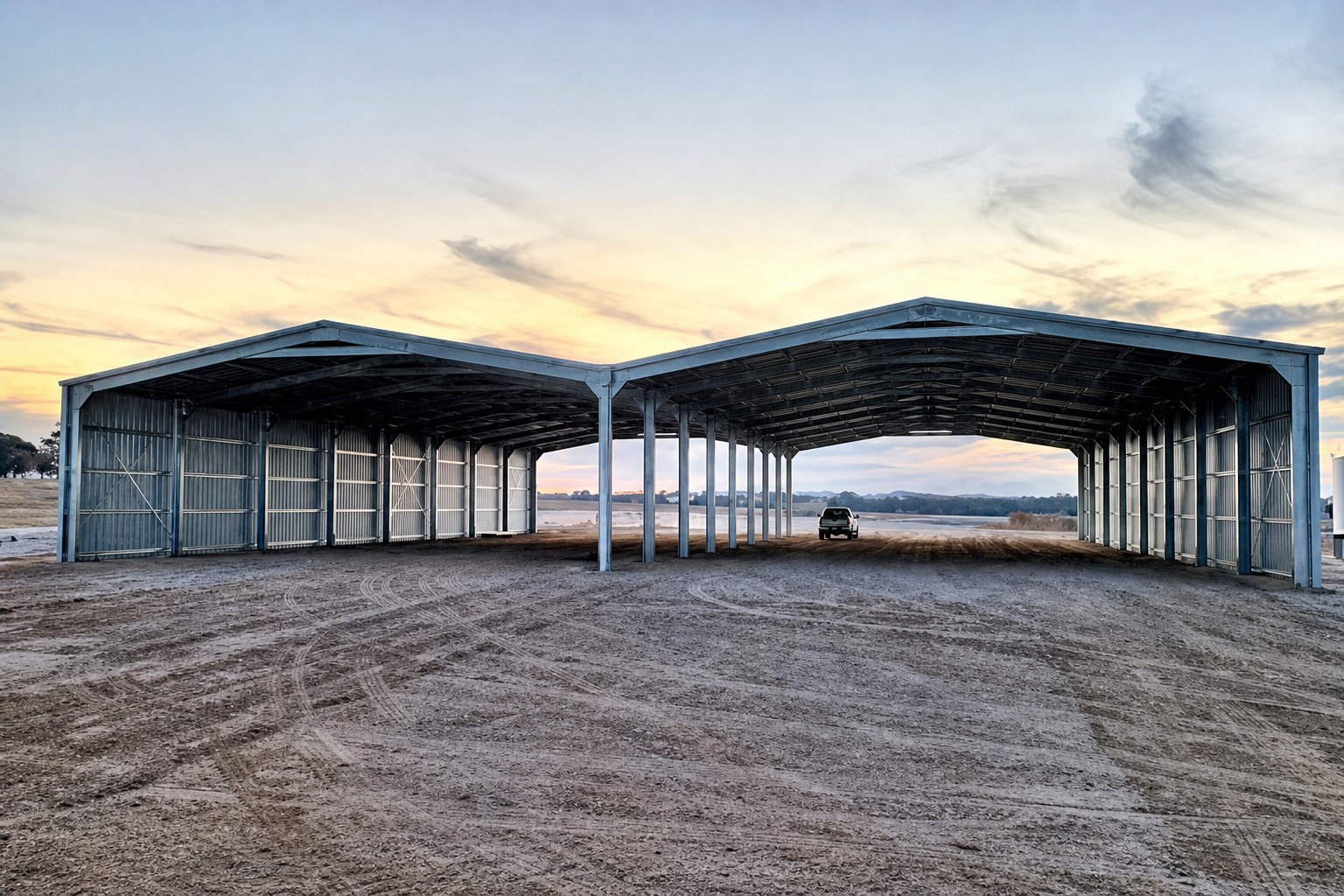
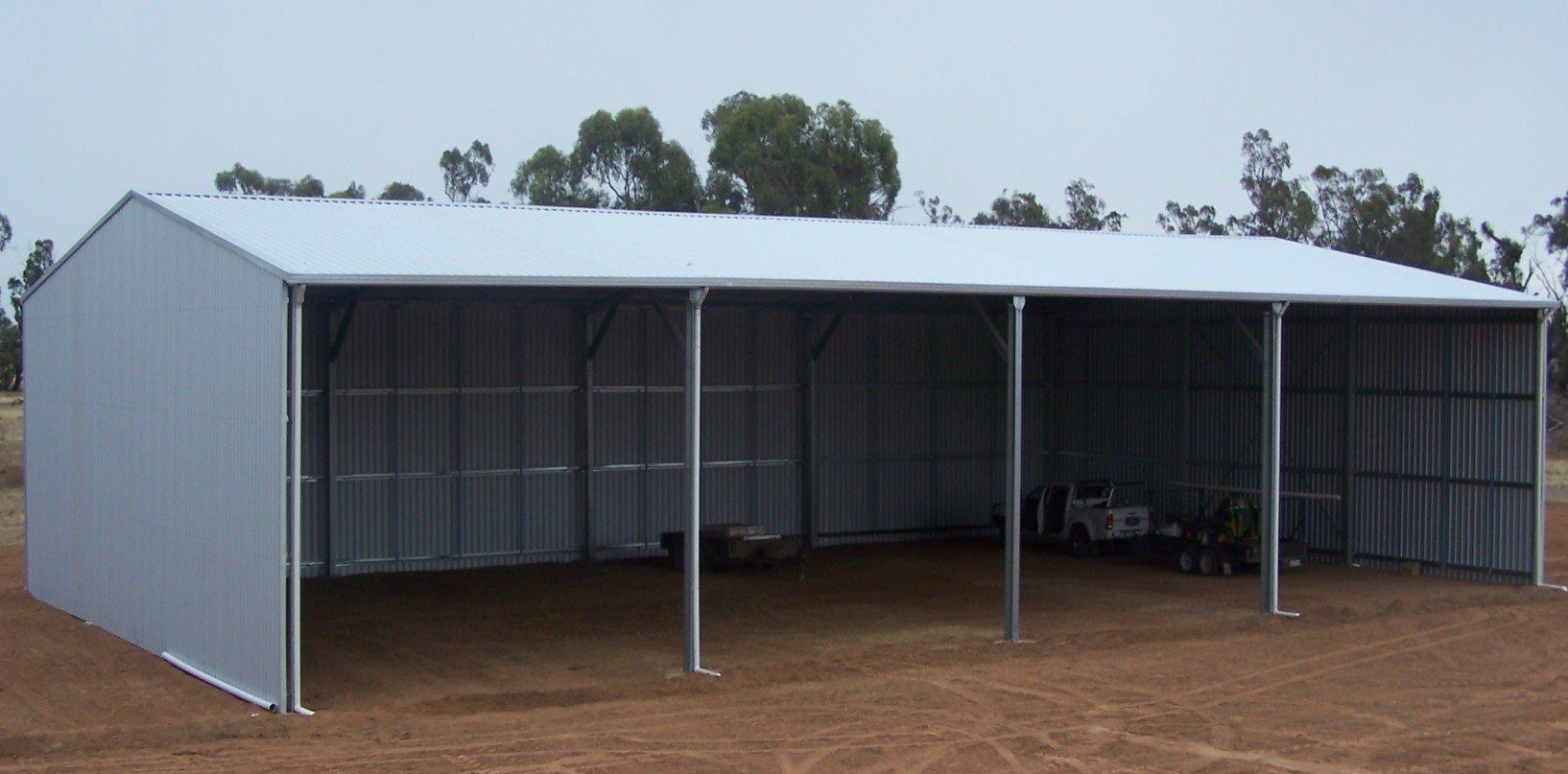
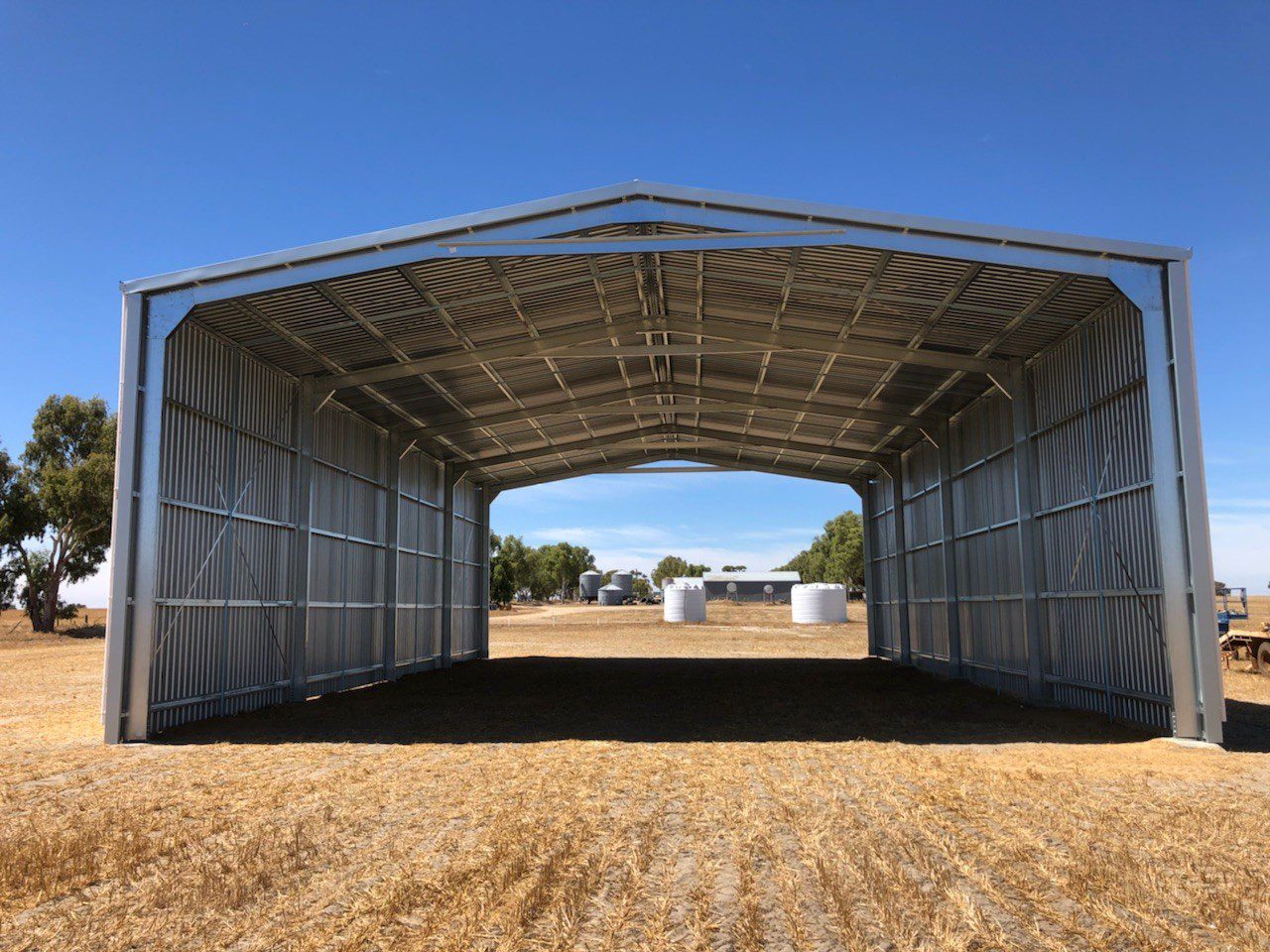
    If you’re housing tractors, headers, or implements, you need clearspan construction — no internal posts to navigate around. Machinery sheds need wide openings (typically 4.2m+ high roller doors) and enough depth for long implements.

    Minimum specs for machinery:

    • Clearspan width: 12m-24m+ (no internal columns)
    • Eave height: 4.2m-6m (accommodate raised implements)
    • Door height: Match your tallest piece of equipment + 300mm clearance
    • Depth: Length of longest implement + 2m manoeuvring space

    Hay Storage

    Hay sheds have specific requirements that differ from general farm storage. Hay is heavy (round bales can weigh 500kg+), stacks high, and needs ventilation to prevent moisture buildup and spontaneous combustion.

    Key hay shed considerations:

    • Open-front design for ventilation and loader access
    • High eave height for stacking (5m-6m+)
    • Floor area calculated by bale count and stacking pattern
    • Roof pitch that sheds water clear of stored hay

    Livestock

    Livestock buildings need ventilation, drainage, and often specific configurations for handling — races, yards, crush areas. Equine sheds are a specialised category with different requirements again.

    Site Considerations

    Wind Region

    Your shed must be engineered for your specific wind region. Properties in northern Australia or exposed coastal sites may need cyclone-rated construction. Every Shedz kit is engineered to your exact site coordinates.

    Access

    Consider how you’ll drive machinery in and out. Think about turning circles, approach angles, and whether you need drive-through access (doors on opposite ends).

    Orientation

    Face open sides away from prevailing weather. In most of eastern Australia, this means opening to the north or east. Your local conditions may differ.

    Clearspan vs Multi-Bay

    Clearspan construction (no internal posts) is essential for machinery and hay. Multi-bay designs with internal columns are cheaper per square metre but restrict what you can store and how you access it.

    For most working farm sheds, clearspan is worth the extra investment. The flexibility to rearrange, upgrade equipment, and access stored items without navigating around posts pays for itself over the life of the building.

    COLORBOND® for Farm Buildings

    Choose colours that blend with your landscape — Woodland Grey, Pale Eucalypt, and Dune are popular choices for rural properties. Some councils require earth-tone colours in rural zones. All 22 COLORBOND® colours are available with up to 45 year manufacturer warranty.

    Explore Our Full Range

    Farm Sheds · Hay Sheds · Machinery Sheds · Equine Sheds · Commercial Sheds · Industrial Sheds · Shed Homes

Our Trusted Suppliers

Lysaght logoMetroll logoStratco logoSteeline logoCenturion logoLarnec logoStramit logoBlueScope logoAMIA logo