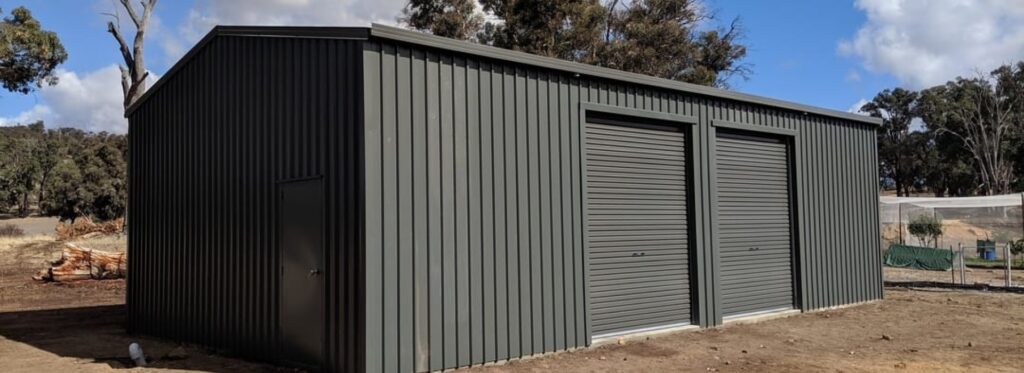
One of the most common questions we get from customers: “Do I need council approval to build a shed?” The short answer is, almost always yes, but the process varies significantly depending on which state you’re in, how big your shed is, and what you’re using it for.
With 38 years of building experience, we’ve navigated council approvals in every state and territory. Here’s your complete guide.
The General Rule
In most Australian states, any structure over 10m² requires some form of approval. Even smaller sheds may need approval depending on your zoning, setbacks, and whether you’re in a bushfire or flood zone.
Every Shedz kit includes full engineering certification, the documentation your council or private certifier needs to approve your build.
State-by-State Requirements
Queensland
QLD requires a Development Application (DA) for most sheds. Your engineer’s certification covers the structural requirements, and your builder or building certifier handles the council lodgement. Read our full QLD guide →
New South Wales
NSW offers two pathways: a Complying Development Certificate (CDC) for standard sheds (faster, through a private certifier), or a Development Application (DA) for larger or more complex builds. Read our full NSW guide →
Victoria
VIC requires a Building Permit for most sheds, plus potentially a Planning Permit depending on your zoning and overlays. Farm-zoned properties may have exemptions. Read our full VIC guide →
South Australia
SA uses a combined Development Approval process covering both planning consent and building rules consent. Some smaller domestic sheds may be exempt. Read our full SA guide →
Western Australia
WA requires a Building Permit for most sheds over 10m². Properties in northern WA need cyclone-rated construction. Read our full WA guide →
Tasmania
TAS requires a Building Permit for most sheds, with potential Planning Permit requirements depending on local schemes. Read our full TAS guide →
ACT
The ACT requires Building Approval for most structures, with Development Application requirements depending on Territory Plan zoning. Read our full ACT guide →
Key Factors That Affect Approval
Bushfire Attack Level (BAL)
If your property is in a designated bushfire-prone area, your shed must be engineered to meet specific BAL requirements. This affects materials, construction methods, and sometimes design. We factor this into every engineering package.
Cyclone Ratings
Properties in northern Australia (coastal QLD, NT, northern WA) require cyclone-rated construction. Our sheds are engineered to Region B, C, or D as required for your specific location.
Setbacks and Boundaries
Every council has minimum setback requirements, how far your shed must be from property boundaries, other buildings, and easements. These vary by zone and local planning rules.
Zoning
Rural, residential, commercial, and industrial zones all have different rules about what you can build, how big it can be, and what it can be used for.
What Documentation Do You Need?
Every Shedz kit includes:
- Full structural engineering certification by a registered engineer
- Engineering drawings and specifications
- Wind load calculations for your specific site
- Footing design specifications
- Material specifications and compliance certificates
This is everything your council or private certifier needs to process your approval.
How Long Does Approval Take?
Timeframes vary by council and application type:
- CDC/Complying Development: 10-20 business days (through private certifier)
- Standard DA: 4-8 weeks
- Complex applications: 2-4+ months (heritage, flood, environmental overlays)
Explore Our Shed Range
Shed Homes · Residential Sheds · Farm Sheds · Commercial Sheds · Industrial Sheds · Equine Sheds · Hay Sheds · Machinery Sheds · Cyclone Rated