Category: Shed Types

  • Livable Shed Homes: The Complete Guide to Steel Frame Kit Homes

    What Is a Livable Shed Home?

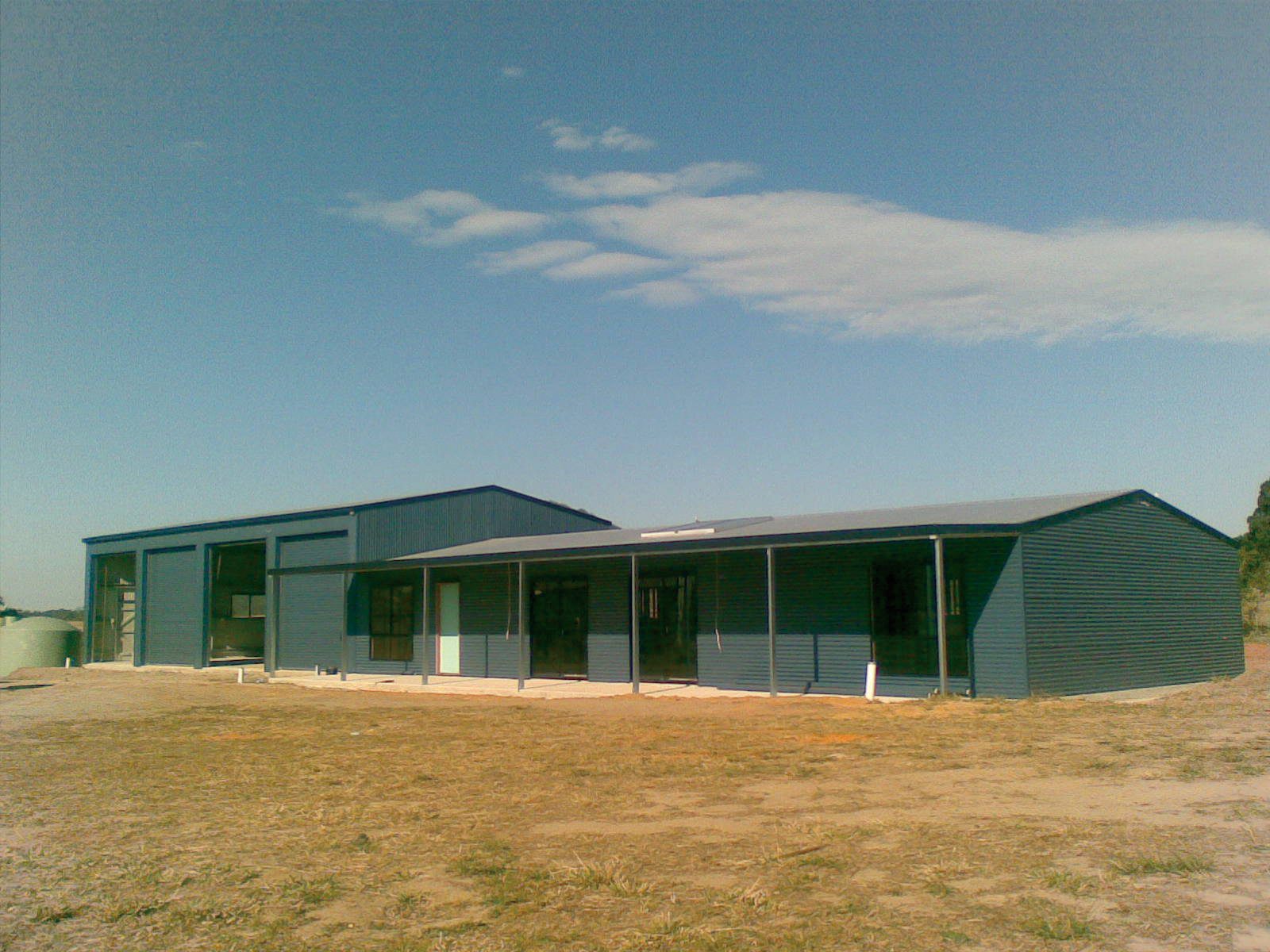
    A livable shed home is a steel-framed building engineered to meet the Australian Building Code as a Class 1A dwelling. It’s not a converted garden shed — it’s a purpose-designed kit home using portal frame steel construction, delivered as a complete structural package ready for fitout.

    The concept has exploded in popularity across regional Australia. With traditional housing costs rising and wait times for builders stretching beyond 12 months, livable shed homes offer a faster, more affordable path to home ownership — without compromising on structural integrity or council approval.

    How Is a Livable Shed Different from a Regular Shed?

    The key difference is engineering classification. A standard shed is a Class 10a structure — a non-habitable building used for storage. A livable shed home is engineered as a Class 1A dwelling, which means it must meet the same structural, fire, and energy standards as any conventional house.

    This means your livable shed includes:

    • Portal frame steel construction — engineered for your specific site conditions including wind, terrain, and soil classification
    • Certified engineering drawings — stamped by a registered engineer, covering footings, frame, bracing, and connections
    • Council-approved plans — ready for Development Approval (DA) or Complying Development Certificate (CDC)
    • COLORBOND® steel cladding — with a Lysaght 20-year warranty on BlueScope steel
    • Provisions for insulation, plumbing, and electrical — designed into the frame from the start

    Why Choose a Livable Shed Home?

    Cost Savings

    Steel frame kit homes typically cost 30–50% less than a conventional brick-and-tile build. You’re purchasing the structural package — the steel frame, roofing, wall cladding, flashings, fasteners, and all engineered components — then managing the fitout yourself or with local trades.

    Speed of Construction

    Most livable shed kits can be erected in 2–4 weeks once the slab is down. Compare that to 8–14 months for a traditional build. The frame goes up fast because every component is pre-cut, pre-drilled, and arrives with detailed assembly drawings.

    Design Flexibility

    Steel frames allow wide clear spans without internal load-bearing walls. This gives you complete freedom to design your floor plan exactly how you want it. Open-plan living, vaulted ceilings, mezzanine floors — it’s all possible with portal frame construction.

    Durability

    Steel doesn’t rot, warp, or get eaten by termites. A properly maintained steel frame shed home will last 40+ years. With COLORBOND® cladding rated for Australian conditions, you’re building something that handles everything from tropical cyclones to alpine snow loads.

    The Owner Builder Advantage

    Many livable shed home buyers are owner builders. By taking on the project management yourself, you can save significantly on builder margins. With Shedz, every component in your kit is mapped in our interactive 3D designer — searchable by part number from the bill of materials, right down to every bolt and bracket.

    This level of detail means you always know exactly what goes where, how many you need, and where each piece fits in the structure. It’s the kind of support that turns a complex build into a manageable project.

    Council Approval Process

    Every livable shed home requires council approval. The process varies by state but generally follows these steps:

    1. Site assessment — soil test, survey, and bushfire/flood mapping
    2. Design brief — your floor plan, dimensions, and site placement
    3. Engineering certification — site-specific structural engineering drawings
    4. Development Application (DA) — or CDC/exempt development depending on your council
    5. Construction Certificate (CC) — approval to begin building
    6. Inspections — footings, frame, lockup, and final
    7. Occupation Certificate (OC) — approval to move in

    Shedz provides the engineering certification and structural drawings needed for your DA. We’ve navigated council approvals across Australia and can guide you through the requirements for your specific location.

    What’s Included in a Livable Shed Kit?

    A Shedz livable shed kit includes everything you need to erect the structural shell:

    • Portal frame steel columns and rafters
    • Purlins and girts (C or Z section)
    • COLORBOND® roof sheeting and wall cladding
    • Ridge capping, barge capping, and flashings
    • Roller doors and/or personal access doors
    • Windows (as specified in your design)
    • All structural bolts, brackets, and fasteners
    • Certified engineering drawings
    • Detailed assembly guide with 3D component mapping

    What’s not included (you’ll arrange separately): concrete slab, insulation, internal lining, plumbing, electrical, and fitout. These are owner-managed items that give you control over quality and budget.

    Popular Livable Shed Home Designs

    Shedz offers 7 standard shed home designs ranging from compact 2-bedroom layouts to spacious 4-bedroom family homes. Every design can be customised — adjust dimensions, add verandahs, change door and window positions, or start from a completely blank canvas.

    Common configurations include:

    • Compact studio/1-bed — ideal for tree change, downsizing, or granny flat
    • 2-bed + garage — popular with couples and retirees on acreage
    • 3-bed family home — open-plan living with dedicated bedrooms
    • 4-bed + workshop — the full package for families who need space
    • Dual occupancy — home + separate workshop or studio under one roof

    Costs: What to Expect

    Kit pricing depends on size, design complexity, wind rating, and your location. As a general guide:

    • Steel frame kit only: varies by design — contact us for current pricing
    • Slab: $80–$150/m² depending on site conditions
    • Fitout (insulation, lining, kitchen, bathroom, electrical, plumbing): $800–$1,500/m² depending on finish quality

    Owner builders can significantly reduce fitout costs by doing their own work or hiring trades directly. The steel kit is typically 20–30% of the total build cost.

    Is a Livable Shed Home Right for You?

    A livable shed home is ideal if you:

    • Own rural or semi-rural land (typically 1+ acre)
    • Want to save on build costs without compromising on engineering
    • Are comfortable managing a project or coordinating trades
    • Want a fast build timeline
    • Value open-plan, customisable floor plans
    • Appreciate steel construction over timber for durability and termite resistance

    Ready to explore? Design your livable shed home in 3D and see every component before you commit.

  • Commercial & Industrial Shed Design: What to Consider

    Commercial & Industrial Shed Design: What to Consider

    Commercial and industrial sheds serve businesses — they need to be functional, compliant, and built to handle heavy use for decades. The design requirements are fundamentally different from residential or farm buildings.

    Commercial vs Industrial: What’s the Difference?

    Commercial Sheds

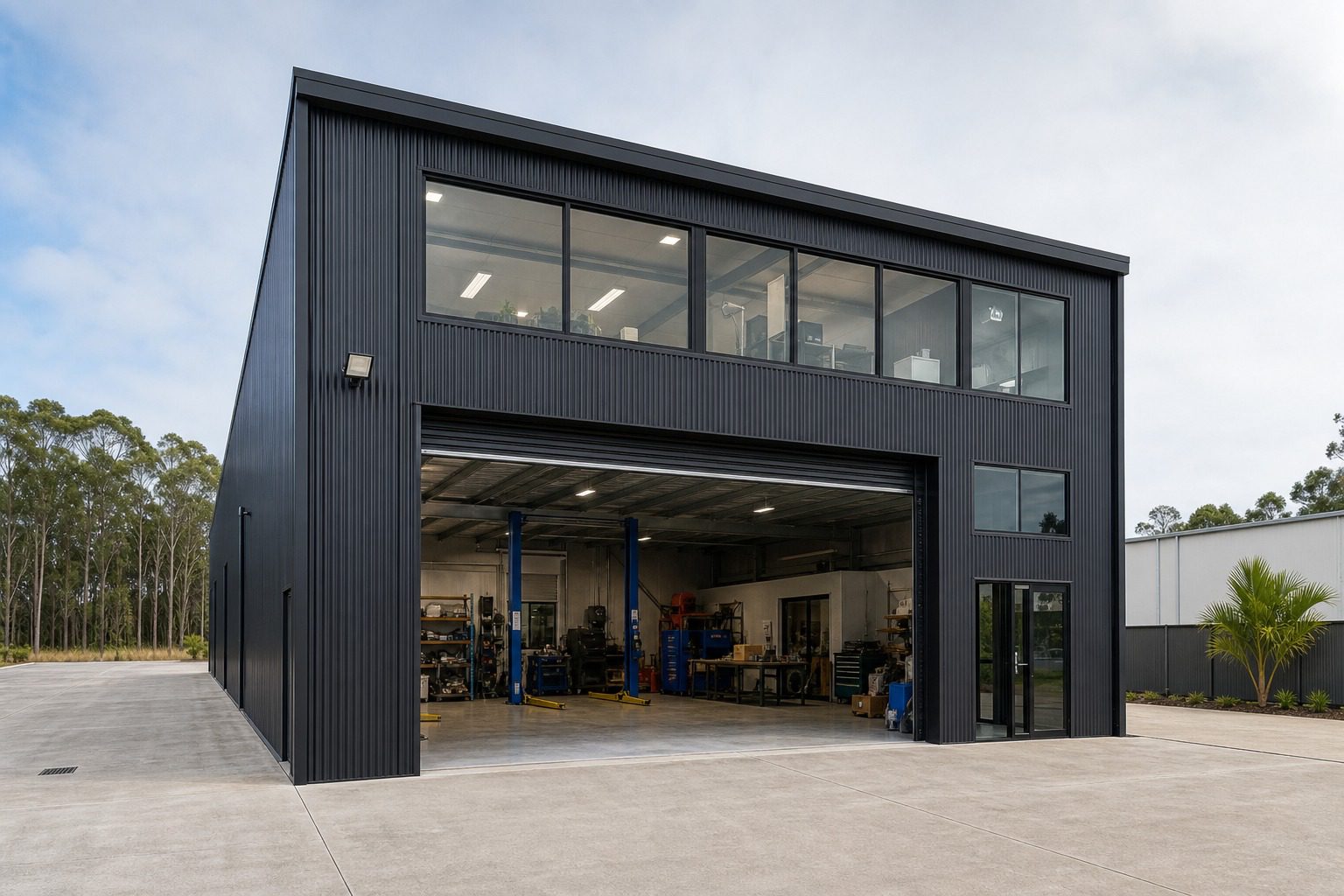
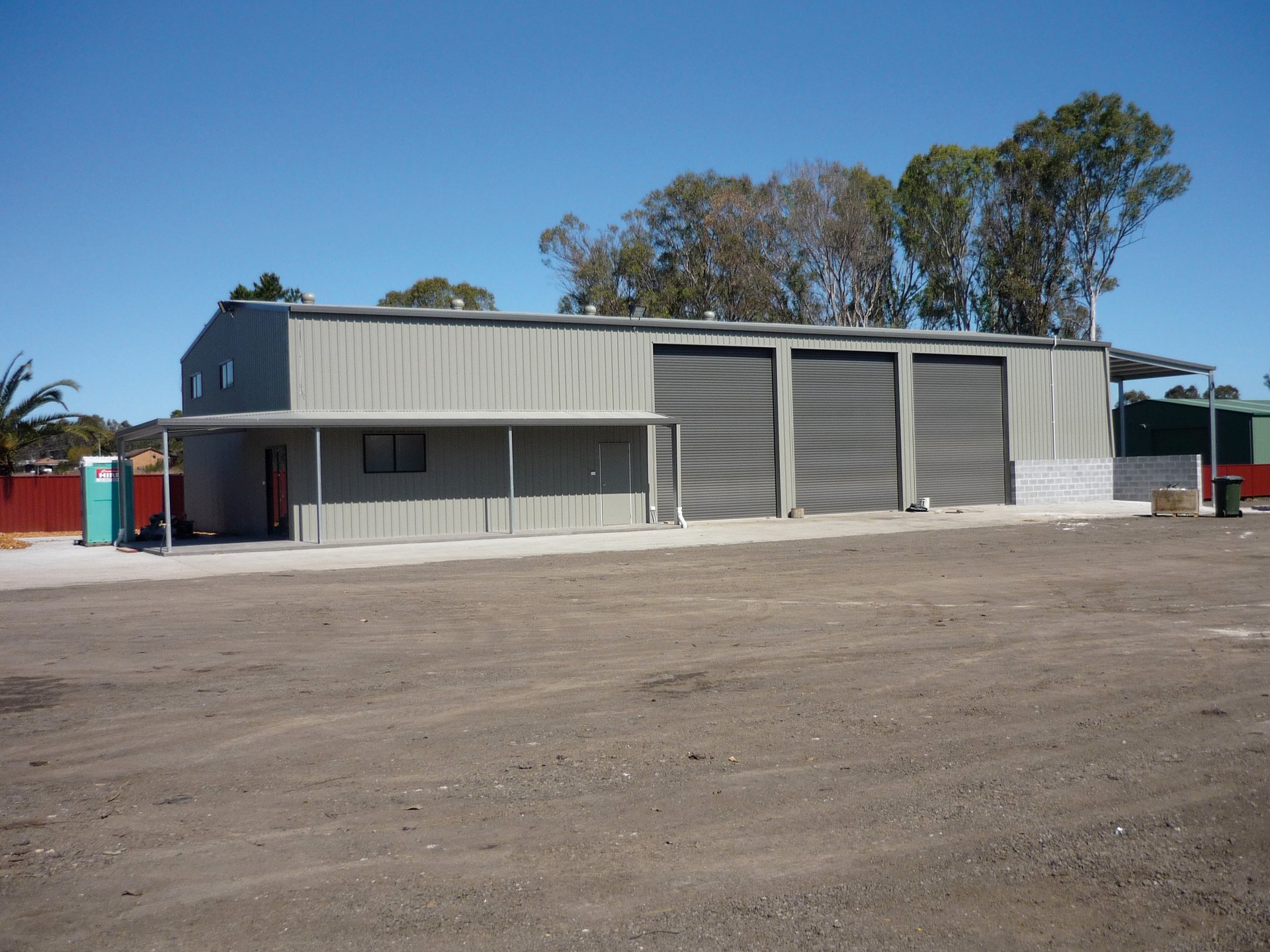
    Trade workshops, retail storage, vehicle servicing, small manufacturing, and business premises. Typically 150-500m² with moderate spans and heights. Often need customer-facing elements (reception areas, bathrooms, parking).

    Industrial Sheds

    Large-scale manufacturing, warehousing, distribution centres, and heavy industry. Typically 500m²+ with wide clearspans (20m+), high eave heights (6m+), and heavy-duty floor loads. May need crane rails, loading docks, and specialised services.

    Key Design Considerations

    Clearspan Width

    Internal columns restrict forklift movement, racking layouts, and future flexibility. For any commercial or industrial building, clearspan construction is almost always worth the investment. We engineer clearspans from 12m to 30m+ depending on your requirements.

    Eave Height

    Don’t underestimate height needs:

    • 4.2m: Minimum for most commercial use
    • 5-6m: Standard warehouse/distribution — allows two-level racking
    • 7-8m+: High-bay warehousing with reach stackers

    Access & Loading

    • Roller doors: standard 4.2m × 4.2m minimum for commercial vehicles
    • Container-height doors: 4.2m wide × 4.8m high for container unloading
    • Drive-through layouts for logistics operations
    • Loading docks for truck-to-warehouse transfers

    Fire Rating

    Commercial and industrial buildings often require fire-rated construction — especially near boundaries or in multi-tenancy developments. Fire-rated walls, boundary setbacks, and hydrant requirements are set by the Building Code of Australia (BCA) and your local council. Our engineering includes BCA compliance documentation.

    Office & Amenities Integration

    Most commercial buildings need an office, bathroom, and kitchenette. These are typically fitted out within the steel frame as insulated, lined rooms. Plan the layout early — services (electrical, plumbing, data) are easier and cheaper to install during construction.

    Council Requirements for Commercial Buildings

    Commercial and industrial DAs are more complex than residential shed approvals:

    • Traffic impact assessment for vehicle movements
    • Stormwater management plan
    • Landscaping and setback requirements
    • Parking calculations (based on floor area and use)
    • Accessibility compliance (disabled access, DDA)
    • Environmental assessments in some zones

    Check your state-specific requirements: QLD · NSW · VIC · SA · WA

  • Equine Sheds & Horse Property Buildings: Planning Guide

    Equine Sheds & Horse Property Buildings: Planning Guide

    Horse properties have unique building requirements that go beyond standard farm sheds. Equine buildings need to consider animal welfare, ventilation, safety, and the specific workflows of equine management.

    Types of Equine Buildings

    Stables

    Individual horse housing requiring minimum 3.6m × 3.6m per stable (12m²). Larger horses need 4m × 4m. Key requirements:

    • Minimum 3m eave height (horses rear — you need headroom)
    • Excellent ventilation — ridge vents, open fronts, or louvred walls
    • Non-slip flooring — compacted earth, rubber mats, or crushed rock
    • Rounded corners and smooth surfaces to prevent injury
    • Good drainage away from buildings

    Open-Front Shelters

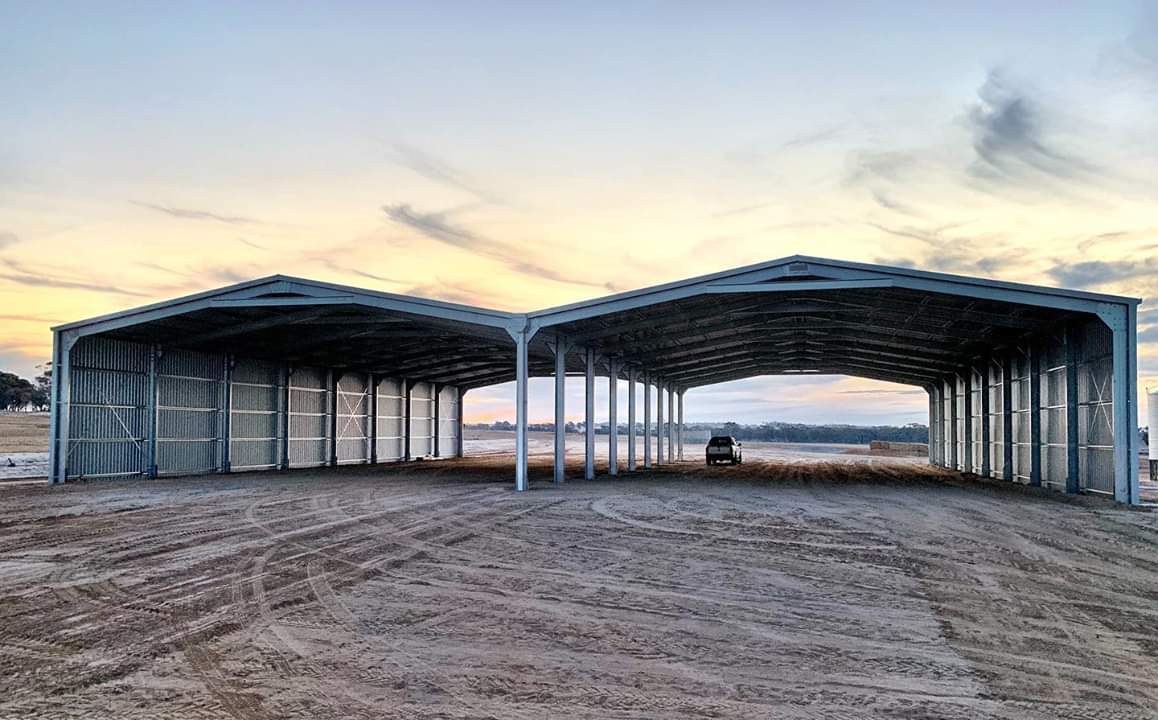
    The most common equine shed — a simple roof structure open on one or more sides. Horses can move freely in and out, choosing shelter when they need it. These are ideal for paddock shelters and can range from simple 6m × 9m structures to large multi-bay shelters.

    Arenas & Indoor Riding

    Indoor arenas are large clearspan structures — minimum 20m × 40m for a small arena, with 60m × 20m being more practical for serious work. Eave heights of 5-6m+ are needed for mounted riding. These are significant engineering projects that require industrial-grade clearspan construction.

    Hay & Feed Storage

    Every horse property needs dedicated hay storage. Calculate based on your horse count × daily consumption × storage period. A 10-horse property keeping 6 months of hay needs substantial storage — typically 15m × 12m minimum.

    Tack & Equipment Rooms

    Enclosed, secure rooms for saddles, bridles, feed, and veterinary supplies. Often integrated into a larger shed as enclosed bays.

    Ventilation Is Critical

    Horses produce significant moisture (breath, urine) and ammonia. Poor ventilation causes respiratory issues — the leading health problem in stabled horses.

    Design principles:

    • Cross-ventilation through opposing openings
    • Ridge ventilation for heat and moisture escape
    • Open fronts or half-walls rather than fully enclosed buildings
    • Orient openings away from prevailing weather
    • Never seal a stable building — horses need constant air exchange

    Safety Considerations

    Horses are large, strong, and easily startled. Every building element must be designed with horse safety in mind:

    • No exposed bolt ends or sharp edges at horse height
    • Heavy-duty sliding doors (not swing doors — horses push through them)
    • Steel construction resists kicking damage better than timber
    • Adequate width for leading horses through (minimum 3m aisles)
    • Non-toxic materials — horses chew everything

    COLORBOND® for Equine Buildings

    Light colours (Surfmist, Shale Grey) are preferred for equine buildings — they reflect heat and keep interiors cooler. Dark-coloured buildings in hot climates can raise internal temperatures significantly, which affects horse welfare and hay quality.

    Related Pages

    Equine Sheds · Hay Sheds · Farm Sheds · Cyclone Rated

Our Trusted Suppliers

Lysaght logoMetroll logoStratco logoSteeline logoCenturion logoLarnec logoStramit logoBlueScope logoAMIA logo