Category: Shed Guides

  • Shed Home vs Granny Flat: Which One Should You Build?

    Shed Home vs Granny Flat: Which One Should You Build?

    We get asked this all the time: “Should I build a shed home or a granny flat?” They’re fundamentally different products for different situations, and choosing the wrong one can cost you tens of thousands of dollars and months of wasted time.

    Here’s the real comparison from someone with 38 years in the building industry.

    What Is a Shed Home?

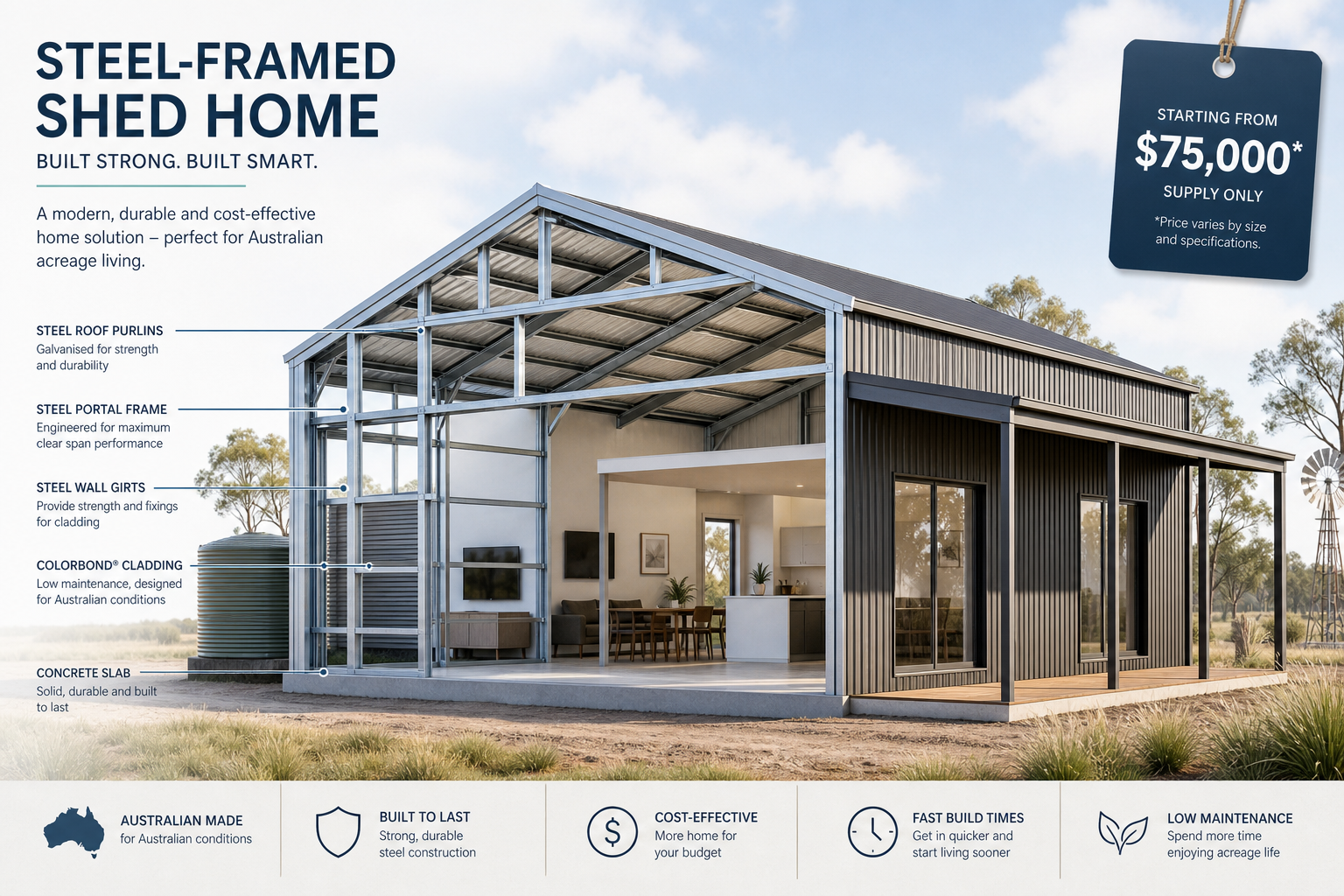
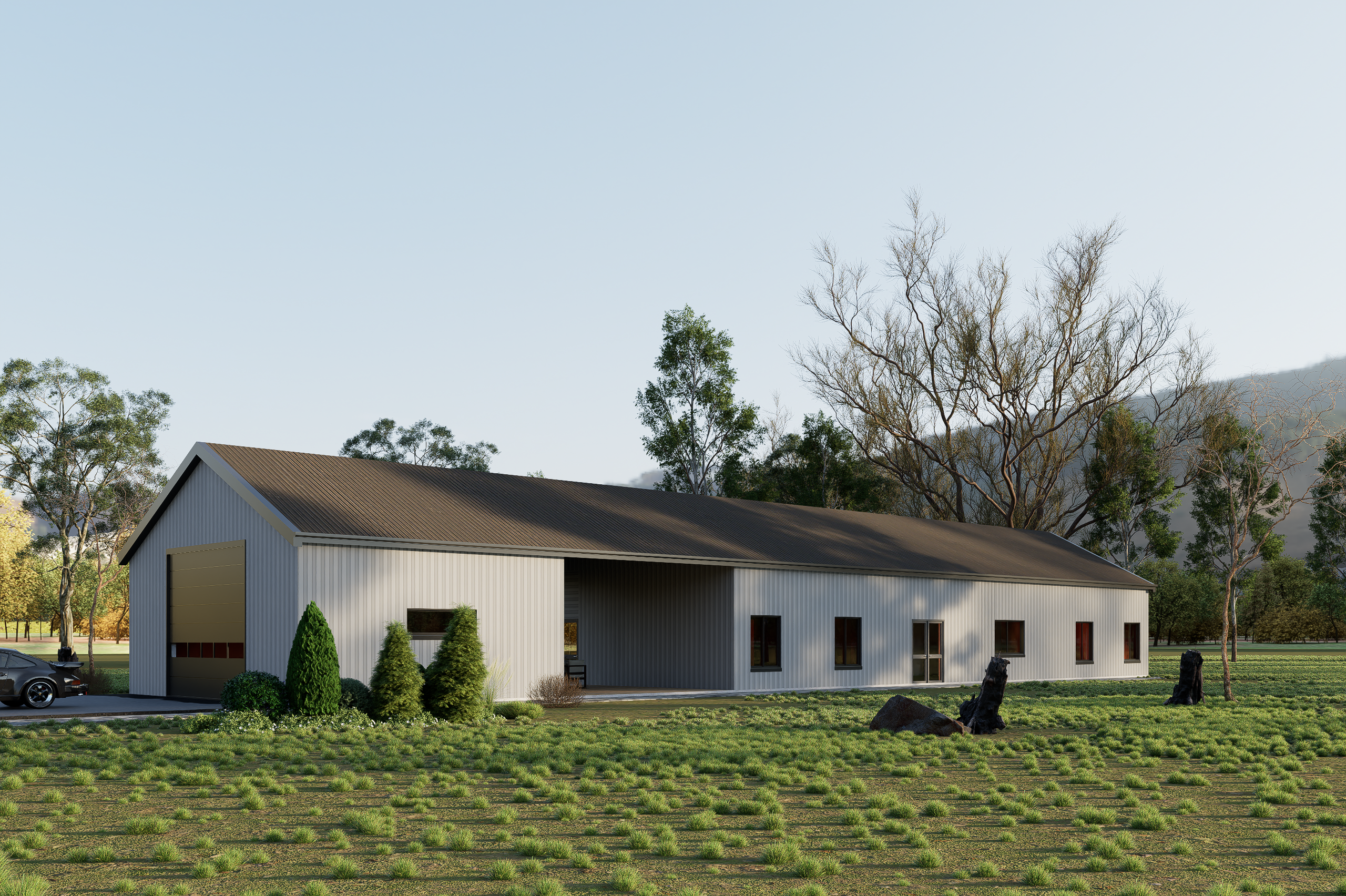
    A shed home is a full-sized residential dwelling built within a steel-framed portal structure. These are not small backyard builds — they’re large-scale homes typically on rural or semi-rural acreage, often 150m²+ of living space with multiple bedrooms, bathrooms, kitchen, and living areas.

    The steel frame acts as the building envelope, with internal fitout to residential building standards. Think of it as building a home inside an engineered steel shell.

    What Is a Granny Flat?

    A granny flat (also called a secondary dwelling or ancillary dwelling) is a small self-contained dwelling on an existing residential block. They’re typically limited to 60m² in most states and are governed by specific secondary dwelling regulations.

    Key Differences

    Size

    • Shed Home: No practical size limit. We build from 100m² to 500m²+. Limited only by your land and budget.
    • Granny Flat: Typically capped at 60m² (varies by state). This is a hard planning limit in most councils.

    Location

    • Shed Home: Best suited to rural, semi-rural, or large lot residential properties. You need land — these aren’t suburban builds.
    • Granny Flat: Designed for existing suburban residential blocks. Most councils require a minimum lot size (usually 450m²+).

    Council Approval

    • Shed Home: Full DA and building approval required, same as any residential dwelling. Engineering certification included with every Shedz kit.
    • Granny Flat: May qualify for CDC (Complying Development) in some states, making approval faster. But size and design restrictions are strict.

    Cost

    • Shed Home: Steel kit from approximately $50,000-$150,000+ depending on size and specifications. Full fitout (electrical, plumbing, insulation, interior) is additional — budget $1,500-$2,500/m² for a complete build.
    • Granny Flat: Typically $80,000-$200,000+ for a complete turn-key build including all services and fitout.

    The Bottom Line

    A shed home gives you a full-sized residential dwelling on rural land with no size restrictions. A granny flat gives you a small secondary dwelling on an existing suburban block. They solve completely different problems.

    When a Shed Home Makes Sense

    • You own acreage or a large rural/semi-rural block
    • You want a primary residence, not a secondary dwelling
    • You need more than 60m² of living space
    • You want a combined living and farm workspace
    • You’re building in a cyclone-rated region and need engineered construction

    When a Granny Flat Makes Sense

    • You have a suburban residential block with enough space
    • You need a small self-contained dwelling (60m² or less)
    • You want rental income from a secondary dwelling
    • You’re housing a family member on your existing property
  • COLORBOND® Steel Shed Colours: Complete Guide to 22 Options

    COLORBOND® Steel Shed Colours: Complete Guide to 22 Options

    Every Shedz shed kit is built with genuine COLORBOND® steel by BlueScope — Australia’s leading steel brand, backed by warranties of up to 45 years. With 22 colours to choose from, the right colour does more than look good — it can affect heat absorption, blend with your landscape, and even influence council approval.

    Why COLORBOND®?

    COLORBOND® steel is specifically engineered for Australian conditions. It’s not just painted steel — the colour is baked onto the surface through a multi-layer process that resists chipping, peeling, and cracking in extreme heat, coastal salt air, and heavy rain.

    • Thermatech® technology — reflects more of the sun’s heat in darker colours
    • Australian-made — manufactured by BlueScope in Port Kembla, NSW
    • Up to 45 year warranty — manufacturer-backed warranty on roofing and walling
    • 22 colours — curated specifically for Australian landscapes and architecture

    The 22 COLORBOND® Colours

    Classic Neutrals

    Surfmist® — The lightest colour, near-white. Maximum heat reflection. Popular for roofing in hot climates and modern exteriors.

    Shale Grey™ — Warm light grey. One of Australia’s most popular shed colours. Versatile and understated.

    Dune® — Warm sandy beige. Blends with rural Australian landscapes. Popular for farm sheds and rural properties.

    Paperbark® — Soft warm neutral. Popular for walls when paired with darker roof colours.

    Evening Haze® — Sophisticated warm grey with subtle warmth.

    Greys

    Windspray® — Cool mid-grey. Clean, contemporary look for commercial and industrial sheds.

    Basalt® — Charcoal grey. Bold, modern aesthetic. Striking contrast with lighter walls.

    Ironstone® — Deep, dark grey-brown. Rich and grounded appearance.

    Woodland Grey® — Dark grey-green. Excellent for blending into bushland and rural settings.

    Monument® — Near-black dark grey. Maximum visual impact. Popular for modern shed homes.

    Earth Tones

    Terrain® — Earthy brown-green. Designed to blend with Australian bush landscapes.

    Jasper® — Rich brown. Works beautifully on rural properties and equine facilities.

    Pale Eucalypt® — Muted green. Blends naturally with eucalyptus-rich landscapes.

    Mangrove® — Deep green. Classic Australian rural colour for farm buildings.

    Cottage Green® — Heritage green. Traditional look for rural and heritage properties.

    Bold & Feature

    Classic Cream™ — Warm cream/yellow. Heritage feel, bright and welcoming.

    Deep Ocean® — Rich navy blue. Striking feature colour for walls and doors.

    Torres Blue® — Medium blue. Coastal feel, works well in tropical and cyclone-rated regions.

    Cove™ — Blue-grey coastal colour. Relaxed, modern feel.

    Gully® — Deep earthy green. Blends with dense vegetation and forested areas.

    Night Sky® — The darkest colour — near-black with a subtle blue undertone.

    Manor Red® — Classic Australian red. Iconic rural roofing colour.

    How to Choose the Right Colour

    Climate Considerations

    In hot climates (northern QLD, inland areas), lighter colours like Surfmist and Shale Grey reflect more heat. COLORBOND®’s Thermatech® technology helps, but lighter colours still perform better in extreme heat.

    Council & Planning

    Some councils require sheds to use colours that blend with the landscape — especially in rural, heritage, or scenic protection zones. Earth tones like Woodland Grey, Pale Eucalypt, and Terrain are safe choices in these areas.

    Mix and Match

    Most customers choose two colours — one for roofing and one for walling. Popular combinations include:

    • Monument roof + Surfmist walls (modern contrast)
    • Woodland Grey roof + Paperbark walls (rural blend)
    • Basalt roof + Shale Grey walls (contemporary clean)
    • Manor Red roof + Dune walls (classic Australian)

    Explore Our Shed Range

    Shed Homes · Residential Sheds · Farm Sheds · Commercial Sheds · Industrial Sheds · Equine Sheds · Hay Sheds · Machinery Sheds · Cyclone Rated

  • Do I Need Council Approval for a Shed in Australia?

    Do I Need Council Approval for a Shed in Australia?

    One of the most common questions we get from customers: “Do I need council approval to build a shed?” The short answer is — almost always yes, but the process varies significantly depending on which state you’re in, how big your shed is, and what you’re using it for.

    With 38 years of building experience, we’ve navigated council approvals in every state and territory. Here’s your complete guide.

    The General Rule

    In most Australian states, any structure over 10m² requires some form of approval. Even smaller sheds may need approval depending on your zoning, setbacks, and whether you’re in a bushfire or flood zone.

    Every Shedz kit includes full engineering certification — the documentation your council or private certifier needs to approve your build.

    State-by-State Requirements

    Queensland

    QLD requires a Development Application (DA) for most sheds. Your engineer’s certification covers the structural requirements, and your builder or building certifier handles the council lodgement. Read our full QLD guide →

    New South Wales

    NSW offers two pathways: a Complying Development Certificate (CDC) for standard sheds (faster, through a private certifier), or a Development Application (DA) for larger or more complex builds. Read our full NSW guide →

    Victoria

    VIC requires a Building Permit for most sheds, plus potentially a Planning Permit depending on your zoning and overlays. Farm-zoned properties may have exemptions. Read our full VIC guide →

    South Australia

    SA uses a combined Development Approval process covering both planning consent and building rules consent. Some smaller domestic sheds may be exempt. Read our full SA guide →

    Western Australia

    WA requires a Building Permit for most sheds over 10m². Properties in northern WA need cyclone-rated construction. Read our full WA guide →

    Tasmania

    TAS requires a Building Permit for most sheds, with potential Planning Permit requirements depending on local schemes. Read our full TAS guide →

    ACT

    The ACT requires Building Approval for most structures, with Development Application requirements depending on Territory Plan zoning. Read our full ACT guide →

    Key Factors That Affect Approval

    Bushfire Attack Level (BAL)

    If your property is in a designated bushfire-prone area, your shed must be engineered to meet specific BAL requirements. This affects materials, construction methods, and sometimes design. We factor this into every engineering package.

    Cyclone Ratings

    Properties in northern Australia (coastal QLD, NT, northern WA) require cyclone-rated construction. Our sheds are engineered to Region B, C, or D as required for your specific location.

    Setbacks and Boundaries

    Every council has minimum setback requirements — how far your shed must be from property boundaries, other buildings, and easements. These vary by zone and local planning rules.

    Zoning

    Rural, residential, commercial, and industrial zones all have different rules about what you can build, how big it can be, and what it can be used for.

    What Documentation Do You Need?

    Every Shedz kit includes:

    • Full structural engineering certification by a registered engineer
    • Engineering drawings and specifications
    • Wind load calculations for your specific site
    • Footing design specifications
    • Material specifications and compliance certificates

    This is everything your council or private certifier needs to process your approval.

    How Long Does Approval Take?

    Timeframes vary by council and application type:

    • CDC/Complying Development: 10-20 business days (through private certifier)
    • Standard DA: 4-8 weeks
    • Complex applications: 2-4+ months (heritage, flood, environmental overlays)

    Explore Our Shed Range

    Shed Homes · Residential Sheds · Farm Sheds · Commercial Sheds · Industrial Sheds · Equine Sheds · Hay Sheds · Machinery Sheds · Cyclone Rated

Our Trusted Suppliers

Lysaght logoMetroll logoStratco logoSteeline logoCenturion logoLarnec logoStramit logoBlueScope logoAMIA logo